
The Teaching of Nishkama Karma Yoga through Sai Baba's Personal Conduct
The Leela
In a rare glimpse into His early years, long before He graced the soil of Shirdi, young Sai set out into the world. He was not seeking fortune or fame, but merely Nirvahapurta—enough for basic sustenance. With a simple cloth tied around His waist, the young Fakir wandered until He reached the village of Beed.
There, He found employment in the intricate art of zari (gold thread embroidery). He was not alone; three other boys worked alongside Him. While the hours were the same for all, the dedication varied immensely. When the time for wages came, the master evaluated their output. To the first, who worked lazily, he gave 50 rupees. To the second and third, who showed moderate effort, he gave 100 and 150 rupees respectively.
But to the young Fakir, whose hands moved with tireless precision and whose heart was poured into every stitch, the master gave double the highest amount—300 rupees. Overwhelmed by this boy’s extraordinary diligence, the master also honored Him with a splendid turban and a shawl.
Yet, the young Sai did not lose Himself in this triumph. He looked at the shimmering rewards—the perishable tokens of worldly appreciation—and set them aside. In the quiet sanctum of His heart, a profound thought echoed: "What this man gives is perishable; it is here today and gone tomorrow. I seek only that which is Eternal, that which my Sadguru bestows."
He did not squander His earnings on luxury or indulgence. He kept only what was needed to survive and offered the rest for the welfare of others, remaining unattached to the fruits of His supreme labor.
? The Conflict / Doubt
How can a person entangled in the relentless grind of worldly duties—office work, household responsibilities, and earning a living—possibly find the time or state of mind for deep spiritual practice and devotion?
The Revelation
Sai Baba transforms the very definition of spirituality, dissolving the boundary between "worldly work" and "divine service." He teaches that Nishkama Karma Yoga (Selfless Action) is not about abandoning work, but about how the work is performed.
- Total Immersion (Purna Karma): Spiritual life does not demand idleness. Baba demonstrated that one must work with absolute intensity and honesty. If you have the talent to earn millions, do so, but do it with the diligence of the Fakir who earned the double wage.
- Detachment from Fruits: The trap is not the work, but the attachment to its rewards—praise, promotions, or luxury. Baba accepted the honor (the turban) but mentally discarded its value, recognizing it as perishable.
- Stewardship, Not Ownership: When we use our resources only for basic needs and dedicate the surplus to public welfare, we act as gardeners of God's creation. We become instruments of the Divine.
- Work as Worship: When you pour your soul into your profession—whether as a doctor saving a life or a teacher uplifting a weak student—without calculating personal gain, that eight-hour shift becomes a spiritual offering. The workplace becomes a temple.
Baba’s teaching is unequivocal:
"I just need a job to sustain myself... I immersed myself fully in that work with utmost diligence."
"Whatever one does, one reaps accordingly... If you work for 50 rupees, you will get only 50."
Only when the foundation of selfless action is laid can the edifice of devotion and knowledge stand tall. Without this purity of action, sitting for meditation is futile.
Scriptural References
📖 Bhagavad Gita (Karma Yoga); Shri Sai Satcharitra Chapter 32 (The Treasure); Shri Sai Satcharitra Verse 168
Watch the Discourse
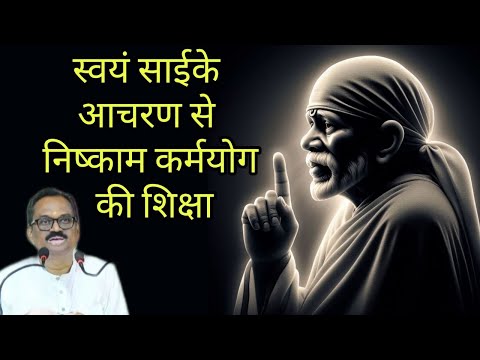
In a rare glimpse into His early years, long before He graced the soil of Shirdi, young Sai set out into the world. He was not seeking fortune or fame, but merely *Nirvahapurta*—enough for basic suste...
Leela Narration
In a rare glimpse into His early years, long before He graced the soil of Shirdi, young Sai set out into the world. He was not seeking fortune or fame, but merely *Nirvahapurta*—enough for basic suste...