
One Bag Filled with Flowers, the Other with Thorns: The Essence of Karma
The Leela
In the grand design of the cosmos, a relentless mill turns slowly but surely—the Wheel of Time (Kaal Chakra). Within its heavy stones, every soul that takes a body is ground like grain. This is the reality of human existence, captured beautifully in the metaphor of two baskets: one filled with fragrant flowers, the other with sharp thorns.
We often look at the world and wonder at its contradictions. A bus full of pilgrims on the way to Tirupati or Vaishno Devi tumbles down a mountain; where was the divine protection? A sinner living in a golden palace enjoys luxury while a saintly figure walks a path of thorns. This visible disparity confuses the mind. We see the potter—the Divine Architect—as a 'Mad Potter' (Veda Kumbhar), mixing earth with water, drying it with air and fire, creating vessels only to break them again.
Yet, this mixture is the very essence of creation. The universe stands on opposing poles: heavy earth and weightless air, cool water and burning fire. To exist here is to be caught in this friction. The deer wanders the forest searching for musk that resides within its own navel; the heron is white but has a harsh voice, while the black cuckoo sings with sweetness. In this bewildering play of opposites, the soul struggles, asking, 'Why must I suffer? Why can I not have only the day without the night?'
? The Conflict / Doubt
Why has the Creator fashioned a universe filled with such stark contradictions and seemingly unjust suffering? If God is benevolent, why do innocent pilgrims perish while the unrighteous prosper, and why is life a basket of mixed flowers and thorns rather than pure joy?
The Revelation
The answers do not lie in fixing the external world, but in understanding the nature of the container—the body—and the content—the soul.
-
The Inevitability of Duality: The world is constructed from five opposing elements. As long as you identify with the body, you are trapped in the field of gravity between these poles. You cannot have heads without tails. Joy and sorrow are relative; demanding one without the other is impossible.
-
The Danger of Comfort: Paradoxically, joy is often more dangerous than sorrow. When life is smooth and filled with pleasure, the mind becomes unconscious, arrogant, and prone to mistakes. In the womb of honor lies the seed of dishonor. In the womb of pleasure lies the seed of pain.
-
Sorrow as a Cleanser: Suffering acts as a spiritual detergent. When the 'Mad Potter' breaks our illusions or tramples our ego in the dust, He is actually purifying us. As Kabir Ji says, "Harijan toh haara bhala" (It is better for God's devotee to lose). Defeat keeps one turned toward the Divine, whereas victory often leads to the gates of death (Yama) through ego and attachment.
-
Rising Above: The solution is not to pray for the removal of thorns, but to rise above the sensation of touch altogether.
"I must rise above my body and intellect to attain my true essence."
- The Drop of Dispassion: Oceans of worldly success cannot quench the soul's thirst; in fact, they increase it. However, a single drop of Vairagya (dispassion) bestowed by the Sadguru can fulfill all desires instantly. When we stop asking for temporary relief and start asking for inner purification, the thorns no longer hurt—they become the very steps to Sat-Chit-Ananda (Truth-Consciousness-Bliss).
Scriptural References
📖 Kabir's Dohas (Chalti Chakki Dekh Ke; Dil Ka Marham Na Mila; Harijan Toh Haara Bhala) | Meera Bai's Bhajan (Karm Ki Gati Nyari Santo) | Marathi Abhang (Vitthala Tu Veda Kumbhar) | Reference to Ramayana (Rama's exile vs. Ravana's luxury)
Watch the Discourse
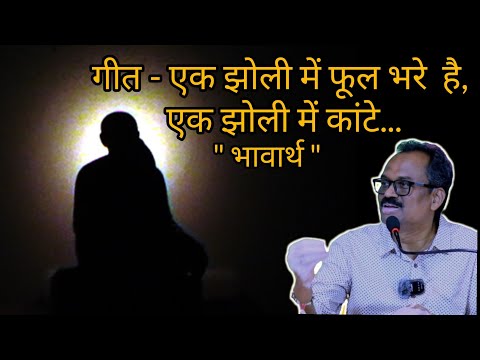
In the grand design of the cosmos, a relentless mill turns slowly but surely—the Wheel of Time (*Kaal Chakra*). Within its heavy stones, every soul that takes a body is ground like grain. This is the ...
Leela Narration
In the grand design of the cosmos, a relentless mill turns slowly but surely—the Wheel of Time (*Kaal Chakra*). Within its heavy stones, every soul that takes a body is ground like grain. This is the ...