
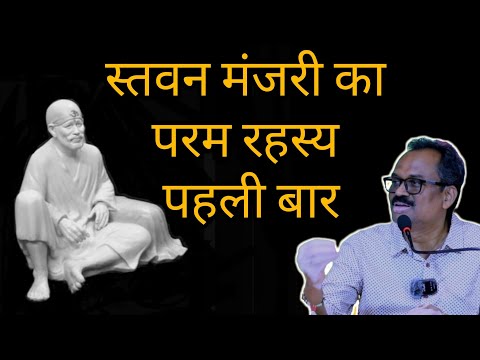
The Ultimate Secret of Stavan Manjari Revealed
The Leela
The atmosphere was heavy with the silence of the void; Sai Baba had left his mortal body. While the devotees in Shirdi were consumed by grief and confusion regarding the final rites, a profound event was unfolding miles away in Pandharpur. In the early hours of Brahma Muhurta, Das Ganu Maharaj received a vivid, heart-stirring vision. Baba appeared to him, his voice filled with a divine weariness.
Bab spoke of the state of affairs in Shirdi, saying, 'The mosque has collapsed... these people have troubled me beyond limits.' He expressed a deep pain—not of physical suffering, but of unrequited spiritual giving. He lamented that while he wished to fill their lives with diamonds and spiritual pearls, they were content collecting mere pebbles and stones.
Then came the command that revealed the mystery. Baba said, 'I have come walking all the way to meet you. Cover my physical body with bouquets of flowers from head to toe. This is my only wish.' Das Ganu was perplexed. Was there a shortage of flowers in Shirdi? But the realization soon dawned: Baba was not asking for perishable roses. He was asking for the Stavan Manjari—the 'Bouquet of Hymns' that Das Ganu had composed on the banks of the Narmada. Baba wanted this hymn recited to the 'deaf' ears of the selfish devotees, hoping that the vibrations of true repentance would finally cleanse their hearts.
? The Conflict / Doubt
Why would Sai Baba, a Fakir of total renunciation who cared nothing for the body, make a specific request to be covered in garlands of flowers after his passing? Was this a desire for posthumous honor, or was there a deeper, hidden meaning behind the word 'Manjari'?
The Revelation
The request was a metaphorical teaching on the nature of true prayer versus transactional devotion.
-
The Meaning of Manjari: 'Manjari' refers to a bouquet. Baba was not asking for physical flowers, but for the recitation of the Stavan Manjari. He wanted the spiritual vibrations of this hymn to cover the atmosphere of Shirdi.
-
Pearls vs. Pebbles: Baba revealed his heartache regarding 'traders' in devotion—those who only came to him for material gain.
"I wanted to fill their hearts with pearls — but they kept collecting pebbles and stones. These oil-merchants, these clingy devotees... they never truly understood my emotions."
- The Power of Repentance: The Stavan Manjari is identified as a tool for chitta-shuddhi (cleansing of the mind). It is the cry of a soul that recognizes its own 'rust' and begs the 'Paris' (Philosopher's Stone) for transformation.
"O Sadguru, I am that iron — Not just iron, but rusted. But You — You are the Paris. If You touch me, I too can become gold."
- The Final Objective: Baba believed that if the selfish devotees listened to this hymn of pure surrender, their transactional nature might fall away, bringing peace to his own soul.
Scriptural References
📖 Sai Satcharitra Chapter 42 (Ovi 70-71), Sai Satcharitra Chapter 39, Sai Stavan Manjari (Ovis 50-54, 83-92, 7-8).
Watch the Discourse
The atmosphere was heavy with the silence of the void; Sai Baba had left his mortal body. While the devotees in Shirdi were consumed by grief and confusion regarding the final rites, a profound event ...
Leela Narration
The atmosphere was heavy with the silence of the void; Sai Baba had left his mortal body. While the devotees in Shirdi were consumed by grief and confusion regarding the final rites, a profound event ...