
How can we make ourselves indebted to Sai?
The Leela
In the sacred pages of the Sai Satcharitra, specifically Chapter 29, we encounter the story of Captain Hart. Stationed in Gwalior, the Captain was blessed with a vivid dream where Baba stood before him. Overwhelmed, Hart fell at the master's feet, only to hear a piercing question: "Why did you forget?"
Struck by the weight of these words, the Captain replied, "Baba, if a child forgets his mother, how will he survive?" Upon waking, the message was clear. It wasn't just a memory; it was a call to renew the bond. He immediately gathered Valpapdi beans, rice, ghee, and lentils—simple provisions—and sent them to Shirdi.
This incident unveils a profound mystery. Baba, the supreme ascetic, asks for raw grains and beans. Why? He is establishing a link. Similarly, we recall the unparalleled devotion of Baija Maa, who would wander through jungles, braving thorns and heat, just to find Baba in His early days and feed Him. She refused to eat until her 'son' Sai had eaten. Years later, Baba repaid this debt of bread in a way only God can—by exchanging His own life force to save her son, Tatya Patil, from the clutches of death.
From Hemadpant eating grams alone to Mrs. Tarkad forgetting the offering in Shirdi, the message echoes through time: The food is merely a medium; the true transaction is of the heart.
? The Conflict / Doubt
Is it truly possible to attain spiritual liberation just by offering a morsel of food? When complex paths like Karma Yoga, Jnana Yoga, or the nine forms of Bhakti seem too difficult for a common householder, can such a simple, mundane act really bind the Divine Consciousness?
The Revelation
Baba presents Himself as the ultimate Merchant—one who engages in a divine trade where the devotee gains infinitely more than they give. The teaching reveals that God yearns to be bound by the devotee's love, creating a spiritual debt (Rinanubandh) that He feels compelled to repay.
- The Divine Exchange: We offer the perishable (food, money, physical service), and in return, Baba grants the eternal (self-realization, liberation). He accepts the "fake coins" of our worldly efforts and fills our treasury with spiritual jewels.
- ** The Debt of Love**: Baba explicitly states that if a devotee consistently offers food to Him—whether mentally, to an idol, or by feeding the hungry—He becomes indebted to them. He cannot rest until that debt is cleared.
- Repayment through Upliftment: Unlike human debts paid in currency, Baba pays His debt by taking responsibility for the devotee's soul. He promises to guide them progressively toward the Divine.
"I will be bound by your debt, and that debt I can only repay when I uplift you. That debt will remain until I uplift you."
"We give them the perishable, and in return, He gives us the eternal."
"If you feed the hungry first, and if anything is left, then eat yourself... my hunger is satisfied."
Scriptural References
📖 Sai Satcharitra Chapter 9 (Tarkad Family), Chapter 29 (Captain Hart), Hemadpant's Grams Leela
Watch the Discourse
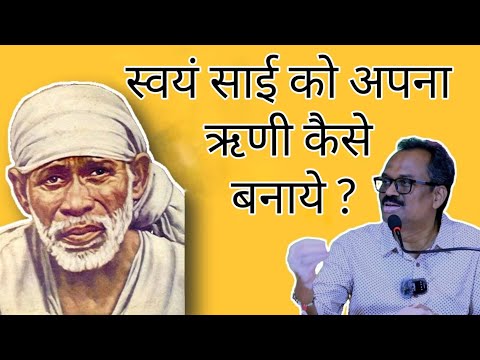
In the sacred pages of the *Sai Satcharitra*, specifically Chapter 29, we encounter the story of Captain Hart. Stationed in Gwalior, the Captain was blessed with a vivid dream where Baba stood before ...
Leela Narration
In the sacred pages of the *Sai Satcharitra*, specifically Chapter 29, we encounter the story of Captain Hart. Stationed in Gwalior, the Captain was blessed with a vivid dream where Baba stood before ...