
The Mystery of Megha, the Trident, and the Shivling
The Leela
In the sacred town of Shirdi, Megha, a staunch devotee of Lord Shiva, worshipped a large picture of Sai Baba in the Sathe Wada with intense devotion, treating it as a living deity. One night, he had a vivid vision: Baba appeared, scattered sacred rice grains (Akshata) over his bed, and commanded him to draw a Trishul (Trident). Megha awoke with a start, astonished to find real rice grains scattered on his bed, exactly as seen in the dream. Yet, confusion clouded his mind—the door to his room was bolted shut. How could Baba have entered? He rushed to Dwarkamai, where Baba, anticipating his arrival, dismissed the logic of closed doors and simply asked if the Trishul had been drawn. Obediently, Megha returned and drew a red Trishul on the wall near Baba's picture. The very next day, a devotee of Ramdas Swami arrived from Pune with a Shivling. Baba accepted it and immediately handed it to Megha, saying, "Lord Shiva has come for you."
? The Conflict / Doubt
Why did Baba specifically instruct Megha to draw a Trishul first, only to gift him a Shivling the very next day? Was this merely a coincidence to strengthen a devotee's faith in Shiva, or does the union of these two symbols hold a deeper metaphysical secret regarding the soul's journey?
The Revelation
This Leela is not just a miracle of materializing rice grains; it is a profound lesson on the union of the individual soul (Atma) with the Supreme (Parabrahma).
- The Nature of Presence: Baba explained that He is the Master of all, unbound by physical barriers like doors. The image in the Wada represented the Atma (Soul), while the living Baba in Dwarkamai represented Vishwa Prana Shakti (Universal Life Force).
- Symbolism of the Trishul: The Trishul represents Purushartha (Spiritual Effort) and Shakti (Divine Energy). It signifies the devotee's striving toward the Divine.
- The Secret of Omkar: The transcript offers a beautiful visualization: if a vertical Trishul is laid horizontally and the Shivling is placed upon it, the combined form resembles the sacred symbol Omkar (ॐ).
- The Path to Oneness: The story illustrates that the journey from Atma to Paramatma is bridged by the realization of Omkar. Human effort (Trishul) must precede the descent of Divine Grace (Shivling). As the speaker notes:
"The journey from the soul (Atma) to the Supreme (Parmatma) is only possible through Omkar."
- Upanishadic Wisdom: This union mirrors the wisdom of the Mundaka Upanishad (partially cited in the talk: praṇavo dhanuḥ śāro hyātmā...), where Om is the bow, the soul is the arrow, and Brahman is the target.
Scriptural References
📖 Sai Satcharitra Chapter 28, Sai Satcharitra Chapter 50, Mundaka Upanishad
Watch the Discourse
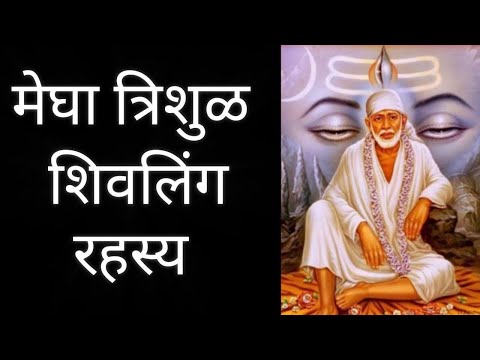
In the sacred town of Shirdi, Megha, a staunch devotee of Lord Shiva, worshipped a large picture of Sai Baba in the Sathe Wada with intense devotion, treating it as a living deity. One night, he had a...
Leela Narration
In the sacred town of Shirdi, Megha, a staunch devotee of Lord Shiva, worshipped a large picture of Sai Baba in the Sathe Wada with intense devotion, treating it as a living deity. One night, he had a...