
Not Suicide, But Self-Surrender
The Leela
Shri Gopal Narayan Amdekar, a devoted soul from Pune, once held a respectable position in the Excise Department at Jawhar. Yet, the wheels of fortune turned, and he found himself jobless, watching his financial stability crumble into dust. For seven long years, he carried his sorrow to Shirdi, pouring his heart out to Sai Baba, hoping for a miracle. Convinced that prolonged service would yield results, he stayed in Shirdi for two months with his family, yet his circumstances remained stubbornly bleak.
Despair is a heavy shroud. Crushed by the silence of the divine and the weight of poverty, Amdekar concluded that his prayers were unheard. Dark thoughts clouded his judgment, and he resolved to end his suffering by jumping into a well. He found a secluded spot, ready to plunge into the abyss.
At that precise moment, Shri Sagun Meru Naik, an instrument of Baba’s grace, appeared and asked, "Have you ever read the book of Akkalkot Swami?" Handing him the scripture, Amdekar opened a page at random. There, he read the tale of a devotee of Swami Samarth who, driven by similar anguish, attempted suicide in a well. In the story, Swami Samarth appeared and pulled him back, warning that suicide solves nothing—one must endure the fruit of one’s karma.
Shaken to his core, Amdekar realized this was no coincidence; it was a direct message from Sai Baba. He abandoned his fatal plan. In the years that followed, Baba not only saved his life but guided him toward a livelihood in astrology, ensuring his prosperity and restoring his faith.
? The Conflict / Doubt
In Chapter 29 of the Sai Satcharitra, Baba explicitly warns devotees not to rely on astrology or consult horoscopes. Yet, here is Amdekar, a devotee whose life was saved and subsequently sustained by mastering that very art. Does this Leela suggest that Baba supports astrology, or is there a deeper, hidden meaning behind this apparent contradiction?
The Revelation
This Leela unveils the profound hierarchy of spiritual compassion over rigid rules. Baba’s handling of Amdekar teaches us that saving a soul takes precedence over dogmatic instruction.
-
The Inescapability of Karma: The primary lesson delivered through the story of Swami Samarth is that suicide is a futile escape. Suffering stems from past actions (Karma), and ending the body does not end the debt. Baba warns that suicide condemns the soul to wander as a ghost, witnessing generations pass without being able to interact, only to eventually be reborn to face the same suffering again.
-
The 'Head vs. Hand' Analogy: Addressing the conflict about astrology, the transcript offers a powerful metaphor. If a person is in a terrible accident involving injuries to the head and the hand, a doctor will prioritize saving the head (life) over the hand. similarly, Amdekar was on the brink of a spiritual catastrophe—suicide. Baba’s priority was to save his life ("the head"). If allowing him to practice astrology—a relatively minor deviation ("the hand")—kept him alive and engaged, Baba permitted it through silence.
-
Silence as Compassionate Allowance: Baba’s silence on Amdekar's astrology was not a universal endorsement of the practice, but a specific concession for a desperate devotee. As the Master, He knew that once the life is saved, the "turban" of correct understanding can be worn later.
"It is not possible to escape from this world without experiencing its joys and sorrows. Suicide will not solve anything."
Scriptural References
📖 Sai Satcharitra Chapter 26 & Chapter 29
Watch the Discourse
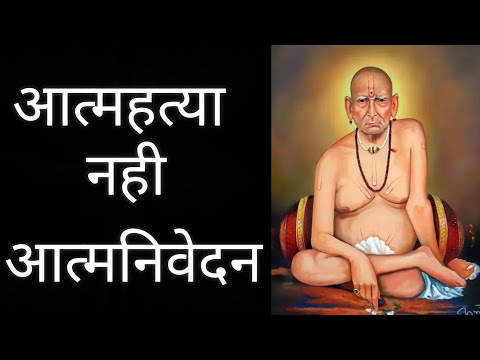
Shri Gopal Narayan Amdekar, a devoted soul from Pune, once held a respectable position in the Excise Department at Jawhar. Yet, the wheels of fortune turned, and he found himself jobless, watching his...
Leela Narration
Shri Gopal Narayan Amdekar, a devoted soul from Pune, once held a respectable position in the Excise Department at Jawhar. Yet, the wheels of fortune turned, and he found himself jobless, watching his...