
The Sweetness of Surrender: The Tale of Haji Siddique Falke
The Leela
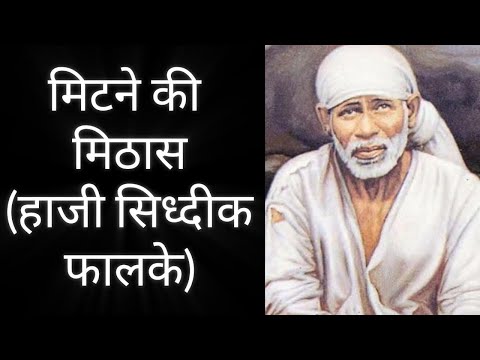
Haji Siddhique Falke, a devout Muslim who had successfully completed the holy pilgrimage to Mecca and Medina, arrived in Shirdi with a heart full of hope. He stayed at the Chavadi, facing north, longing for a glimpse of Sai Baba. Yet, for nine agonizing months, Baba not only refused him entry into the Masjid but denied him even a single glance or eye contact. While the Masjid was open to all without restriction, the Haji alone was barred.
Disappointed but unbroken, the Haji did not leave. He eventually sought the help of Madhavrao Deshpande (Shama). When Shama pleaded his case, asking for permission, Baba replied sternly, "Oh Shama, Allah has no mercy on him. Then how can he come to this Masjid?" However, conceding to Shama's request, Baba posed a series of cryptic tests: "Ask him if he will be able to walk the pathway near the Barvi well properly?" followed by, "Will he be able to give me four times Rs 40,000?" and finally, a shocking inquiry about slaughtering a goat: "Does he want flesh, flesh with bones, or the testicles of the goat?"
To every test, the Haji responded with total surrender, willing to walk on thorns, give lakhs of rupees, and accept whatever Baba decided. Seeing this readiness to be utterly destroyed and remade, Baba finally accepted him, breaking his clay pots to symbolize the breaking of his old self, biting his hand to remove the doership, and finally feeding him a mango and granting him the Holy Brahma meal.
? The Conflict / Doubt
Why would a compassionate Sadguru like Sai Baba torment a sincere devotee—who had already performed the Hajj—by refusing him darshan for nine months and demanding strange, violent sacrifices?
The Revelation
This Leela reveals the profound difference between a common "spiritual itch" and the rare, burning "spiritual thirst" (Mumukshu). Baba's rejection was actually a process of intense purification to prepare the vessel for divine grace.
- The 9-Month Wait (Gestation): Just as a child suffers in the womb for nine months before birth, the Haji's rejection was a spiritual gestation. He was being prepared to be "born again" in the spiritual world.
- The Barvi Well (12 Years of Tapa): Baba’s question about the path to the Barvi well symbolized the 12-year cycle of Tapa (penance). Just as a shadow at noon merges completely into the body, a disciple who serves the Guru for 12 years merges into the Guru's consciousness.
- 40,000 Rupees (Surrender of Comfort): This was not about currency, but the willingness to sacrifice all worldly comforts and luxuries.
- The Goat Slaughter (The Three Egos): Baba’s shocking metaphor about the goat represented the three layers of the individual self that must be sacrificed:
- Flesh: The pride of the body (Me-ness, name, and fame).
- Flesh with Bones: Attachment to the body and family security.
- Testicles (Private Organ): Body intelligence and the very seed of separate existence.
"The one who understands that there is a sweetness in perishing is the sign of a true traveller of spirituality."
- Breaking the Pots: By breaking the Haji’s water and food pots, Baba symbolically destroyed his reliance on survival instincts, pushing him to face "death" of the ego while still alive.
- Mangoes & Rs 55 (Love & Bhakti): Once the vessel was empty, Baba filled it. The mangoes represented pure Love, and the Rs 55 symbolized Verse 55 of the Narada Bhakti Sutra (Tatprapya tadevavlokyeti): seeing God in every particle, speaking only of Him, and contemplating only Him.
Scriptural References
📖 Sai Satcharitra Adhyay 9, 11, 19, 35; Bhagavad Gita Chapter 7 Verse 3; Narada Bhakti Sutra 55.
Watch the Discourse
Haji Siddhique Falke, a devout Muslim who had successfully completed the holy pilgrimage to Mecca and Medina, arrived in Shirdi with a heart full of hope. He stayed at the Chavadi, facing north, longi...
Leela Narration
Haji Siddhique Falke, a devout Muslim who had successfully completed the holy pilgrimage to Mecca and Medina, arrived in Shirdi with a heart full of hope. He stayed at the Chavadi, facing north, longi...