
The Coconut of Regret and the Path to Surrender: A Leela of Pundlik Rao
The Leela
In the 51st chapter of the Sai Satcharitra, we encounter Pundlik Rao, a devotee from Nanded. During a journey to Rajmundry, he had the immense fortune of meeting the revered saint Shri Vasudevanand Saraswati, also known as Tembe Swami. Upon learning that Pundlik Rao hailed from Nanded—close to Shirdi—Tembe Swami entrusted him with a coconut, saying, "Take this to my brother, Sai Baba. Tell Him I seek His grace and that my devotion may grow stronger day by day."
However, Pundlik Rao did not travel to Shirdi immediately; a month passed, and the gravity of the responsibility faded slightly from his mind. Later, while journeying to Shirdi with friends, they felt the pangs of hunger and thirst. They stopped by a canal to eat chiwda (flattened rice), but found it too spicy. Someone suggested, "Break the coconut and mix it with the chiwda; it will taste better." In the heat of the moment, the coconut—the very one meant for Baba—was broken, mixed, and consumed.
As they resumed their journey, realization struck Pundlik Rao like a lightning bolt. He had eaten the offering meant for the Saint! Filled with remorse and dread, he eventually reached Shirdi. When he approached the Dwarakamai, Baba immediately asked, "Give me what my friend has sent for Me." Embarrassed and trembling, Pundlik Rao confessed his mistake, offering to replace it with another. But Baba smiled, revealing that the specific coconut was irreplaceable because of the sentiment attached to it, yet He comforted Pundlik Rao, teaching him that the event occurred by His will alone.
? The Conflict / Doubt
Two significant questions arise from this incident. First, why did Baba insist on that specific coconut when Pundlik Rao was willing to bring thousands more? Second, and more philosophically perplexing: throughout the first fifty chapters of Sai Satcharitra, the focus is heavily on Purushartha (human effort and hard work). Yet suddenly, in Chapter 51, Baba dismisses the concept of effort, stating, "Whatever good or bad you do, it happens only with My will." How do we reconcile this apparent contradiction between the necessity of effort and the finality of divine will?
The Revelation
Baba uses Pundlik Rao's guilt to impart a profound lesson on the evolution of spiritual life—from the ego of action to the humility of surrender.
-
The Sentiment (Bhav) is Irreplaceable: The coconut was merely a medium; the real value lay in Tembe Swami's intense devotion. Baba accepts the inner intention, not just the physical object. He assured Pundlik Rao:
"Even if you bring thousands of coconuts, none will be like the one given to you... When I had the desire to call you, that very moment the coconut came into your hands, and it broke according to My wish."
-
The Trap of Spiritual Ego: Baba points out that Pundlik Rao's excessive regret was actually rooted in the ego of being a "doer" of good deeds. Regret often stems from the pride that "I should have done better." Baba teaches that one must shed the ego of both virtues (merits) and sins.
-
The Four "Pr's" of Sadhana: The journey to the Divine passes through four stages:
- Prayas (Effort)
- Prarthana (Prayer)
- Pratiksha (Patience/Waiting)
- Prasad (Grace)
-
Resolving the Paradox of Effort vs. Surrender: The teachings of Chapter 51 apply to those who have already exhausted their Purushartha. One cannot claim "I am not the doer" prematurely to avoid effort. Just as deep sleep only comes after physical exhaustion, true Samadhi (spiritual absorption) and surrender come only after the exhaustion of the conscience through relentless Karma Yoga. You must walk the path of effort until your ego melts; only then does the Guru descend to say, "Now, leave the rest to Me."
Scriptural References
📖 Sai Satcharitra Chapter 51, Sai Satcharitra Chapter 19, Bhagavad Gita
Watch the Discourse
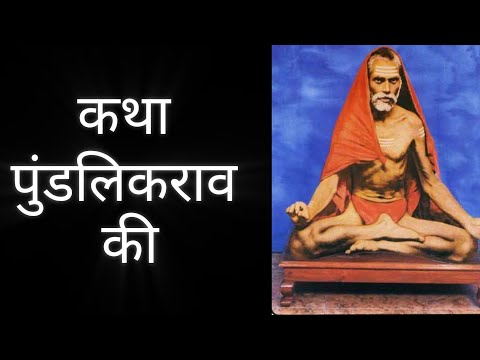
In the 51st chapter of the *Sai Satcharitra*, we encounter Pundlik Rao, a devotee from Nanded. During a journey to Rajmundry, he had the immense fortune of meeting the revered saint Shri Vasudevanand ...
Leela Narration
In the 51st chapter of the *Sai Satcharitra*, we encounter Pundlik Rao, a devotee from Nanded. During a journey to Rajmundry, he had the immense fortune of meeting the revered saint Shri Vasudevanand ...