
It Begins and Ends in Bhakti: The Secret of Avatarhood
The Leela
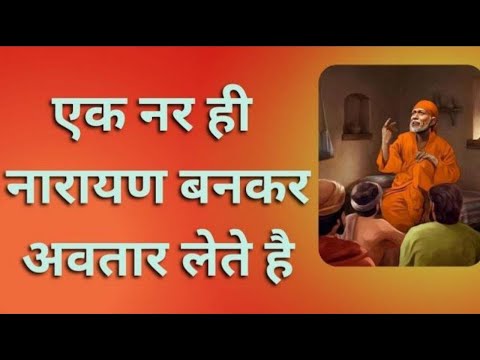
In the sacred presence of Shirdi, a learned seeker named Anantrao Patankar arrived, burdened by a paradoxical struggle. He had mastered the Vedas, absorbed the Upanishads, and studied the scriptures thoroughly, yet his mind remained as restless as a storm. He approached Sai Baba with a heavy heart, confessing, 'Baba, despite all my knowledge, I cannot still my mind for even a second. I heard you grant peace instantly—please help me.'
Instead of offering a complex philosophical discourse, Baba narrated a strange, seemingly absurd tale: 'There was a merchant who owned a mare. The mare passed nine stools. The merchant, being action-oriented, rushed to gather those nine droppings in his garment, clutched them to his chest, and in that moment, his mind became completely still.'
Patankar was bewildered. He had come expecting the keys to meditation, yet he received a story about horse dung. Confused, he turned to Dada Kirtankar for clarity. With a smile, Dada explained the profound symbolism hidden in the Baba's cryptography: The merchant is the sincere seeker, the mare represents Divine Grace, and the nine droppings symbolize Navavidha Bhakti (the nine forms of devotion). Baba was teaching that until the mind gathers and absorbs these nine forms of devotion, intellectual knowledge alone cannot cure the restlessness of the soul.
? The Conflict / Doubt
If God alone incarnates repeatedly to restore Dharma, does human effort have any meaning, or is the Individual Soul (Jivatma) merely a puppet in a divine play?
Conventionally, we believe that when Adharma rises, the Supreme Lord descends. However, if this is the only truth, then Advaita (non-duality) loses its significance. If a soul cannot attain the Supreme and return with the power of that completeness, then the spiritual journey is futile, and humanity is reduced to a helpless spectator awaiting a dictator-like savior.
The Revelation
The true essence of Avatarhood and the spiritual journey is not a divine monopoly but the ultimate fruition of human potential. The journey begins in simple devotion, matures into knowledge, and culminates in returning to the world as an embodiment of Bhakti.
-
The Definition of an Avatar: An Avatar is not merely God descending; it can be a Jivatma (individual soul) that has walked the path, attained Purna Brahma (complete realization), and chooses to return to the world with a sacred resolve to serve and uplift others. This validates Advaita—the soul and God are one.
-
The Three Impurities & Their Cures: To attain this state, one must cleanse the three great internal defects:
- Mal (Impurity): The accumulation of negative tendencies. This is removed only through Nishkama Karma Yoga (Selfless Action).
- Vikshep (Restlessness): The wandering mind. As taught in the story of the mare, this is cured by Upasana (Navavidha Bhakti). Only when body, mind, and wealth are surrendered does the mind settle.
- Aavaran (Veil): The ignorance covering the truth "I am Brahman." This is removed by Jnana (True Knowledge) granted by the Sadguru.
-
The Cycle of Bhakti: The spiritual master knows all Yogas—Karma, Jnana, and Raja—yet they appear as simple devotees (Fakirs). Why? Because the journey begins with simple devotion and, after attaining the highest wisdom, ends in devotion to uplift others.
"Purnabrahmaswaroopchut, aisa ha jivatama purvavat... The soul descends from the Supreme, and the goal is to return to that same Supreme Brahman."
Scriptural References
📖 Sai Satcharitra Chapter 16 (The Three Impurities), Chapter 20 (Definition of Avatar), Chapter 21 (Anantrao Patankar & Navavidha Bhakti), Chapter 24.
Watch the Discourse
In the sacred presence of Shirdi, a learned seeker named Anantrao Patankar arrived, burdened by a paradoxical struggle. He had mastered the Vedas, absorbed the Upanishads, and studied the scriptures t...
Leela Narration
In the sacred presence of Shirdi, a learned seeker named Anantrao Patankar arrived, burdened by a paradoxical struggle. He had mastered the Vedas, absorbed the Upanishads, and studied the scriptures t...