
The Three Gunas and the King's Judgment: Ascending from Darkness to Nirguna
The Leela
In a grand kingdom, a wise King sat upon his throne to deliver judgment upon three different criminals, each representing a distinct nature of the human soul.
To the first man, who had committed a minor error, the King spoke softly, not with anger but with disappointment: "O being, I did not expect this from you. Please, do not do this again." Struck by the weight of these gentle words, the man was so overcome with conscience and shame that he left the village forever, unable to bear the guilt.
To the second man, whose crime was graver, the King ordered one hundred lashes. The man endured the punishment, but the humiliation wounded his pride so deeply that he locked himself in his house for three months, unable to face society.
To the third man, who had committed an unforgivable sin, the King delivered the harshest sentence: "Shave half his head, blacken his face, and parade him through the village upside down on a donkey." As the shameful procession passed his own home, this man casually called out to his wife, "Hey, heat some water! The parade is almost over; I will be home soon for a bath."
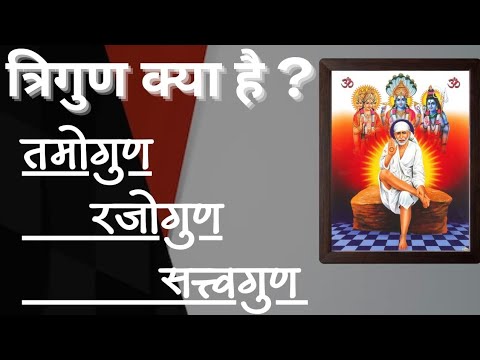
This parable unveils the mystery of the Trigunas—the three qualities that bind every soul. The third man represents Tamas (ignorance and lethargy), where shame does not exist, and life is consumed by base instincts. The second is Rajas (passion and activity), where honor and ego dictate reaction. The first is Sattva (purity and harmony), where a mere whisper of unrighteousness pierces the heart.
Yet, the speaker warns that the journey does not end at Sattva. Even the thought "I am a good person" is a golden chain that binds. True liberation lies in stepping beyond these three into Nirguna—the attribute-less state where one realizes that every good deed is not their own, but the grace of the Divine.
? The Conflict / Doubt
Is it sufficient to simply be a 'good person' and perform charity, or does the subtle ego of righteousness (Sattvic Ego) act as a hidden barrier to spiritual liberation? Furthermore, how does one distinguish between necessary livelihood and the trap of Tamasic indulgence?
The Revelation
The discourse reveals that while one must ascend from Tamas to Rajas, and from Rajas to Sattva, the final goal is Nirguna—a state beyond all attributes where the ego is dissolved completely.
-
The Hierarchy of Gunas:
- Tamas: Life revolves around the 'Dining Table and Bedroom'—money is earned solely for lavish consumption and lust. There is no higher purpose.
- Rajas: There is still desire for wealth, but it is balanced with an appreciation for art, music, and culture. The individual has control over their instincts and maintains social honor.
- Sattva: The focus shifts to Dharma (duty), ethics, and charity. Wealth is used for the service of the Virat (Cosmic form), like the philanthropy of Ratan Tata.
-
The Trap of Sattvic Ego: Even in Sattva, the thought "I know everything" or "I gave this money" creates a dangerous pride. The speaker admits that in his youth, he felt he 'knew' everything, which was a spiritual obstacle.
-
Surrendering Doership: To reach Nirguna, one must realize that no good deed is performed by the individual alone. It is a conspiracy of Grace.
"If you help an accident victim, remember: God kept your mind calm, God put compassion in your heart, God gave you physical strength to lift him, and God ensured you had money in the bank. How then can you say, 'I did this'?"
-
The Final Prayer: True spirituality is looking at the suffering of others, like Jesus on the Cross, and praying not for revenge, but for their forgiveness, understanding that they act out of ignorance.
Scriptural References
📖 Vedas, Upanishads, Bhagavad Gita, Sai Satcharitra, The Passion of the Christ (Reference)
Watch the Discourse
In a grand kingdom, a wise King sat upon his throne to deliver judgment upon three different criminals, each representing a distinct nature of the human soul. To the first man, who had committed a m...
Leela Narration
In a grand kingdom, a wise King sat upon his throne to deliver judgment upon three different criminals, each representing a distinct nature of the human soul. To the first man, who had committed a m...