
The Silent Trade: Offering Pebbles to Receive Jewels
The Leela
In the sacred atmosphere of Shirdi, the melody of 'Jab subah ki aarati khatam hui' resonates, capturing the essence of Archan Bhakti (devotional worship). Yet, the Master reminds us that the physical act is hollow without the mind's presence.
He recounts a telling Leela from the days of Sathe Wada involving two friends. One devotee, tempted by worldly distractions, went to watch a local dance show, while the other sat in Dwarkamai for Baba’s Darshan. However, the man in the mosque soon grew restless, his mind wandering to the entertainment he was missing: 'I wish I had gone to the show; I could have come back later.'
Meanwhile, the friend at the show was struck by sudden remorse. Tears streamed down his face as he thought, 'How wretched I am. On this holy ground, I am watching this dance instead of being with Baba. Baba, forgive me.' Though his body was at the show, his mind was prostrate at the Guru's feet.
Later, when they appeared before Sai, Baba spoke a cryptic truth to the man who had sat in the mosque:
"He is here, and you are there."
It was only when the friends spoke later that the devotee realized Baba had seen their minds, not their bodies. The one at the show was spiritually present in Dwarkamai, while the one in Dwarkamai was mentally lost in the show.
? The Conflict / Doubt
If the Supreme Consciousness is formless, infinite, and the source of all purity (Nirguna), does He truly need us to bathe Him, dress Him, or crown Him? Isn't offering physical items to the Creator of the Universe a futile exercise?
The Revelation
True worship is not about the needs of the Divine, but the purification of the devotee. It is a divine transaction described as an "unprofitable deal" for God, but a salvation for us.
- The Divine Exchange: We offer the Sadguru "pebbles and stones"—our humble physical services like bathing, dressing, and garlanding the idol. In return, despite the insignificance of our offering, He grants us the "Jewel of Wisdom" and self-realization.
- The Internal Bath: The Infinite Consciousness does not need a bath. However, when we bathe the idol with tears of devotion, the song lyrics reveal that our sins are washed away. We cleanse our own minds through the ritual.
- Shedding Layers: When we drape a new cloth over Baba, we are symbolically discarding our own "old garments"—the layers of ego, pride, lust, and greed. By covering Him, we uncover our true selves.
- The Crown of Humility: Placing a crown on Baba is not to add to His glory, for He owns the universe. Rather, it signifies the removal of our own arrogance. As we crown Him, we become liberated from our own false pride.
- Mental Worship: True devotion is defined by the focus of the mind. As Baba teaches:
"Give your body to worldly affairs, and your mind, heart, and soul to Baba's feet."
Scriptural References
📖 Sai Satcharitra Chapter 10, Verse 129; Bible (Parable of the Two Debtors); Kabir's Couplets
Watch the Discourse
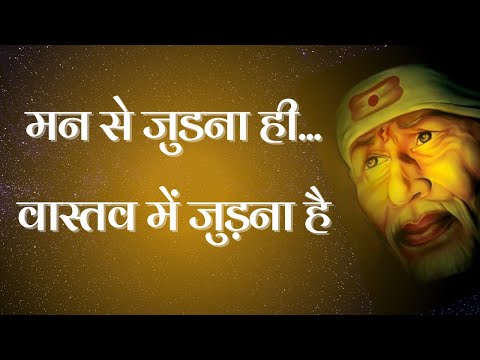
In the sacred atmosphere of Shirdi, the melody of *'Jab subah ki aarati khatam hui'* resonates, capturing the essence of **Archan Bhakti** (devotional worship). Yet, the Master reminds us that the phy...
Leela Narration
In the sacred atmosphere of Shirdi, the melody of *'Jab subah ki aarati khatam hui'* resonates, capturing the essence of **Archan Bhakti** (devotional worship). Yet, the Master reminds us that the phy...