
Miracles vs. Purification: The Tale of Two Devotees
The Leela
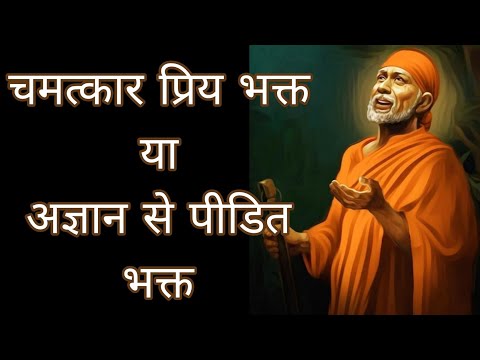
In the sacred pages of the Shri Sai Satcharita (Chapter 49), a fascinating study of contrasts unfolds through the lives of two distinct devotees: Hari Kanhoba and Kaka Saheb Dixit.
Hari Kanhoba, a man of wealth and skepticism, arrived in Shirdi not with a surrendered heart, but with a testing mind. Draped in fine silk, wearing a golden-threaded turban and expensive shoes, his motive was intellectual curiosity: "Does this Sai Baba truly perform miracles? Let me see." Understanding the nature of this guest, Baba decided to play the role of a divine thief. While Hari sat before the Master, his precious slippers—symbols of his attachment to comfort and status—vanished. Though physically present in the holy Dwarkamai, Hari’s mind was frantically wandering outside, obsessed with the loss of his footwear. To shatter his pride, Baba orchestrated a peculiar miracle: a young boy walked through the crowd carrying the missing slippers on a stick, chanting, 'Hari ka beta, Jari ka pheta...' (Son of Hari, Turban of Zari). The slippers had traveled inexplicably to the very spot where Hari sat, leaving him stunned and humbled.
In stark contrast stands the noble figure of Kaka Saheb Dixit. Unlike Hari, who sought wonders, Kaka sought only purity. When urged by Nana Saheb Chandorkar to visit Shirdi for the healing of his physical limp, Kaka famously declared, "I do not care if my leg remains lame. The real disability is the lameness of my mind—filled with impurities and ignorance. If your Guru is powerful, ask Him to heal my inner being." With such purity of intent, he did not even need to reach Shirdi initially; Baba, in His infinite grace, traveled to meet him in Ahmednagar through a miraculous appearance in a photograph, proving that for the pure-hearted, the Guru is always near.
? The Conflict / Doubt
What is the correct mindset for a devotee approaching the Guru? Should one seek Siddhi (miracles) to validate faith, or is the craving for miracles actually a barrier to true Shuddhi (purification)?
The Revelation
This Leela unveils the profound difference between approaching God for entertainment versus transformation. Through these two stories, Baba teaches us the conditions required for Grace.
-
The Symbolism of Slippers: The stealing of Hari's slippers was not a random prank; it was a symbolic lesson. Slippers represent our worldly comforts and sensory indulgences. We leave shoes outside a temple to signify leaving the world behind. However, Hari carried his attachment into the holy space.
"If you wish to enter into devotion, leave your comforts behind. You cannot carry worldly comforts into devotion and expect your mind to be still."
-
The Incompatibility of Indulgence and God: Baba emphasizes that spiritual growth (Ram) and worldly indulgence (Kaam) cannot coexist in the same heart, just as day and night cannot exist together.
"Two swords cannot stay in one sheath... If you seek spiritual growth, you must drop indulgence."
-
The Magnetism of Pure Intention: While Hari chased miracles and found only anxiety, Kaka Saheb sought inner cleansing and found God instantly. The teaching is clear: If the intention is pure, the devotee need not walk to Shirdi; Shirdi walks to the devotee.
"Those who come with such pure intention don’t even need to come all the way to Shirdi. I Myself will come to them."
-
Suffering as a Catalyst: Baba explains that the mind often only turns to God when comforts are removed. Hari's brief distress over his shoes forced his mind to focus, whereas his luxury had made him skeptical. As Kabir Das says, if we remembered God in joy (Sukh), there would be no need for sorrow (Dukh).
Scriptural References
📖 Shri Sai Satcharita, Chapter 49 (Verses 69, 76)
Watch the Discourse
In the sacred pages of the *Shri Sai Satcharita* (Chapter 49), a fascinating study of contrasts unfolds through the lives of two distinct devotees: Hari Kanhoba and Kaka Saheb Dixit. Hari Kanhoba, a ...
Leela Narration
In the sacred pages of the *Shri Sai Satcharita* (Chapter 49), a fascinating study of contrasts unfolds through the lives of two distinct devotees: Hari Kanhoba and Kaka Saheb Dixit. Hari Kanhoba, a ...