
The Madrasi Bhajan Mela: Chains of Greed and the Freedom of Faith
The Leela
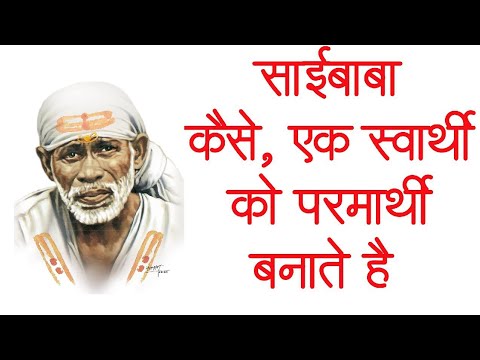
A bhajan group from Madras—consisting of a man, his wife, his sister-in-law, and his daughter—set out for Kashi. However, upon hearing rumors that the Saint of Shirdi was distributing large sums of money, their path diverted. Driven by the hope that their lifelong financial struggles might end, they arrived in Shirdi not for spiritual upliftment, but with the intent of acquiring wealth.
The man's wife had once been a devout soul, blessed with frequent visions of Lord Rama. Yet, as greed took root in her heart, the divine visions faded. When Baba’s gaze fell upon her during the Aarti, His heart melted. He washed away the greed within her, and instantly, her connection was re-established—she saw Lord Rama in Baba’s form. Excitedly, she told her husband, "I saw Lord Rama!"
Her husband, a miserly skeptic obsessed with wealth, mocked her: "Did Lord Rama give you money? If He didn't give you 5-10 crores, what is the use of such a vision?"
To cure this deep-seated disease of greed, Baba appeared to the husband in a vivid dream. The man saw himself in jail, bound by chains. He pleaded innocence, but Baba reminded him of past karmas. Then, in a terrifying turn, the man closed his eyes and heard a thud—a police officer lay dead, and the man was framed for the murder. With no escape and his hands figuratively 'free' to be blamed, he collapsed in total surrender, crying, "Baba, only you can save me!"
Baba commanded him to open his eyes. The chains vanished. The jail vanished. He stood free before Baba. When asked about the difference between his previous visits and this moment, the man wept: "The difference between earth and sky. Before, I came to a fakir hoping for money. Now, I stand before the Supreme, selfless and surrendered."
? The Conflict / Doubt
Can a devotee approach God with immense greed and still find salvation, and why does a compassionate Saint sometimes inflict severe psychological crisis upon a devotee?
The husband in the story represents the skepticism that measures spiritual worth by material gain. He questions the value of divine visions if they do not result in hard currency, highlighting the conflict between Preyas (pleasant/material gain) and Shreyas (spiritual good).
The Revelation
Baba’s method of curing the 'disease of greed' is profound and radical. He creates a crisis so intense that the mind is forced to detach from its obsession with wealth and pleasure.
- The Surgery of Suffering: To kill the tendency of indulgence, Baba may introduce a crisis (like the terrifying dream of imprisonment). When a person is in deep trouble, the appetite for sensory pleasure and greed vanishes naturally. As the transcript notes, "If you have a fever, you cannot eat delicious dishes."
- Avidya and Maya: The chains in the dream represent Avidya (individual ignorance/Jiva), and the prison bars represent Maya (collective ignorance/Shiva). Baba frees the devotee from both.
- The Kabir Principle: The teaching concludes with a powerful analogy from Sant Kabir:
"Just as a boat is laden with water in a river, wealth accumulates within a house. With both hands throwing it out, this is the wise way."
- The Divine Promise: Once the greed is surgically removed, Baba assures the devotee that their material needs will still be met, but without the attachment:
"I will give you money wherever you need it... My invisible hand will keep giving you. You don't need to ask for anything separately."
Scriptural References
📖 Sai Satcharitra (Madrasi Bhajan Mela), Adhyaya 27 (Concept of Avidya and Maya), Sant Kabir Dohe
Watch the Discourse
A bhajan group from Madras—consisting of a man, his wife, his sister-in-law, and his daughter—set out for Kashi. However, upon hearing rumors that the Saint of Shirdi was distributing large sums of mo...
Leela Narration
A bhajan group from Madras—consisting of a man, his wife, his sister-in-law, and his daughter—set out for Kashi. However, upon hearing rumors that the Saint of Shirdi was distributing large sums of mo...