
The Clay Pot and the Water: Quenching the Thirst of Lifetimes
The Leela
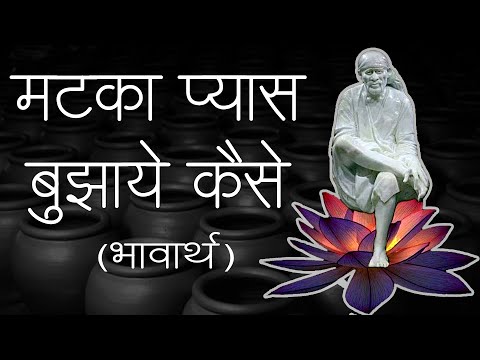
We live our lives clutching a beautiful vessel, mistakenly believing that the vessel itself will quench our thirst. In this divine Leela, we are reminded of the story from Chapter 48 of the Sai Satcharitra regarding Mrs. Sapatnekar. In a profound vision, she finds herself at a well named Lakkadsha to fetch water. Suddenly, a Fakir appears and offers, 'Hey, why are you laboring in vain? Let me fill your pitcher with pure water.' Instead of gratitude, fear strikes her heart. She runs away, thinking, 'Why does this man want to fill my pitcher? What selfish motive does he have?'
This reaction mirrors our relationship with the Divine. The Fakir was none other than Baba, offering the nectar of grace, yet she fled back to the dry well of the world. Baba later reveals the truth of this vision: 'This world is the well of Lakkadsha.' We have spent lifetimes trying to drink from the clay pot of worldly existence—family, wealth, festivities—hoping for satisfaction. Yet, just as a clay pot without water cannot hydrate, the world without spirituality cannot satisfy the soul. We are the crazy ones, taking birth after birth, trying to squeeze contentment from the dry clay of material life, unaware that the Master stands ready with the pitcher of pure water to end our thirst forever.
? The Conflict / Doubt
Why is it that despite achieving material success, fulfilling desires, and accumulating wealth, the human heart remains restless and the thirst for 'more' only intensifies?
Context: The seeker often tries to balance the Bhoga (enjoyment of the world) with Yoga (union with God), wondering why true peace remains elusive while clutching onto worldly attachments.
The Revelation
The metaphor of the Clay Pot and the Water reveals the fundamental error in human pursuit.
- The Illusion of the Pot: The world, with all its relationships, status, and pleasures, is merely a clay pot. We try to quench our thirst from the pot, but the pot itself is dry. The thirst is only quenched by the water inside—which represents the Soul, Spirituality, and the path shown by the Guru.
- The Nature of Desire: Worldly pleasures do not satisfy desire; they inflame it. As the Master notes, "If you receive a salary of ten thousand, you won't be happy; you'll want fifteen thousand." Pursuing the world to find peace is like drinking salt water.
- The Two-Edged Sword: One cannot ride two horses at once. You cannot hold onto the desire for the world and the desire for Baba simultaneously. To attain the Eternal, the attachment to the Impermanent must be sacrificed.
- The Broken Boat: In a profound act of grace, Baba may deliberately shatter the devotee's worldly stability—their "boat"—to save them from drowning in illusion.
"I have made your life a broken boat that rocks in the waves... so that your attraction to transience, this false body that you're referring to as 'me', should be shattered, so that the real 'I' can be attained."
"Come to my court. I have water with me. Drink it once and see, the thirst of countless lifetimes will be extinguished."
Scriptural References
📖 Sai Satcharitra Chapter 48
Watch the Discourse
We live our lives clutching a beautiful vessel, mistakenly believing that the vessel itself will quench our thirst. In this divine Leela, we are reminded of the story from Chapter 48 of the Sai Satcha...
Leela Narration
We live our lives clutching a beautiful vessel, mistakenly believing that the vessel itself will quench our thirst. In this divine Leela, we are reminded of the story from Chapter 48 of the Sai Satcha...