
The Tale of Two Coins: A Lesson on Pure Devotion vs. Hidden Greed
The Leela
In the divine atmosphere of Shirdi, a fascinating interplay of devotion unfolds, distinguishing true sentiment from calculated greed.
It begins with Captain Hathe from Gwalior, who, unable to visit personally, sends a single rupee coin to Sai Baba through a friend. He does not explicitly state his wish, but holds a deep, silent prayer in his heart: If Baba touches this coin, sanctifies it with His holy hands, and returns it to me, it will be my greatest blessing. When the friend arrives in Shirdi and offers the coin, the Omniscient Baba immediately responds to the unspoken sentiment. He takes the coin, examines it carefully from all angles, tosses it playfully, and accepts the love behind it, acknowledging the Captain's pure heart.
Witnessing this exchange is Vaman Narvekar, a local resident. Unlike the Captain, his mind is not on the blessing, but on the potential gain. He thinks, "If I get a coin touched by Baba's hand and keep it in my worship abode, wealth will flourish in my house. Why don't we have that intelligence?"
Driven by this materialistic calculation, Vaman presents a special coin to Baba—one featuring Lord Ram, Lakshman, Sita, and Hanuman. He creates an outer spectacle of devotion, but Baba, who resides within the heart, sees the transaction clearly. Baba accepts the coin and pockets it. When Vaman demands it back, Baba sets a condition: "Give me 25 rupees in exchange, then I will return this rupee."
Vaman, blinded by the prospect of turning that consecrated coin into millions (25 lakhs), borrows money to pay the 25 rupees. Yet, after taking the money, Baba refuses to return the original coin. The lesson is stark: Baba is not a merchant to be bartered with, but a physician curing the disease of greed.
? The Conflict / Doubt
Can one acquire spiritual grace through imitation and calculation?
Vaman Narvekar witnessed a devotee receiving grace and assumed that by mechanically repeating the action—offering a coin—he could extract the same result for material gain. He failed to understand the difference between Bhav (inner sentiment) and external action.
The Revelation
Baba's refusal to return the coin was not a punishment, but a profound act of purification. The teaching highlights that God cannot be deceived by outward shows of devotion when the inner motive is greed.
- The Omniscience of the Guru: Baba knew Captain Hathe's silent prayer without being told, just as He knew Vaman's hidden greed despite the holy images on his coin.
- Destruction of Greed: Baba took the 25 rupees not because He needed money, but to drain the greed from Vaman's system. By taking the money and still withholding the coin, He broke the devotee's trap of material attachment.
- The Real Wealth: The story teaches that the true blessing is not the material coin, but the removal of the vices that bind us.
As Baba declared regarding the greedy demand:
"Even if he settles a heap of money in front of me instead of 25 rupees... Even then, I won't give him this rupee."
Scriptural References
📖 Shree Sai Satcharitra
Watch the Discourse
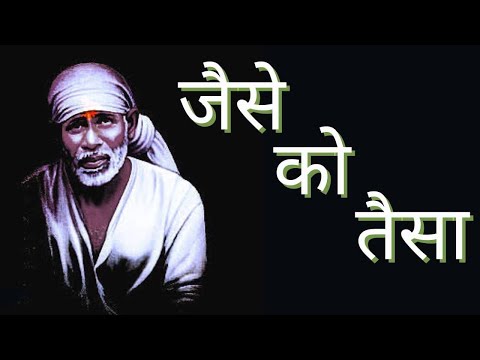
In the divine atmosphere of Shirdi, a fascinating interplay of devotion unfolds, distinguishing true sentiment from calculated greed. It begins with Captain Hathe from Gwalior, who, unable to visit p...
Leela Narration
In the divine atmosphere of Shirdi, a fascinating interplay of devotion unfolds, distinguishing true sentiment from calculated greed. It begins with Captain Hathe from Gwalior, who, unable to visit p...