
The Mirage of Information: True Wisdom vs. Mere Words
The Leela
In the sacred annals of spiritual history, an avatar of Dattatreya, Sri Narasimha Saraswati, stood as a beacon of pure experience. He was not merely a man of words but a storehouse of realization. However, where light shines, shadows often gather. A proud scholar, highly proficient in the Vedas and intoxicated by his intellectual accumulation, grew jealous of the Saint's rising influence.
Accompanied by his disciples, the scholar marched to the hermitage, challenging the Master. "People call you God, but that is their foolishness. I shall prove who is truly knowledgeable!" he declared. Sri Narasimha Saraswati, the embodiment of humility, simply replied, "I am but a servant at your feet. There is no need to prove anything; I believe you are the wise one." But the scholar's ego demanded a public victory. He insisted on a debate.
With a gentle smile, the Master asked for a small stick and drew seven lines on the ground. He then called out to a wild man named Bhola—a savage who lived on dog's meat and had not bathed in months. The scholar scoffed, "What can this wild man tell us of the Vedas?"
Sri Narasimha Saraswati asked Bhola to cross the seven lines. As Bhola stepped over the final line, a transformation occurred. The Master asked the scholar's complex Vedantic question to the savage. To the scholar's utter flabbergast, Bhola answered in fluent, perfect Sanskrit, dismantling the scholar's pride in an instant.
Later, in the sacred atmosphere of Dwarkamai, Sai Baba would echo this truth through a parable recorded in Khaparde's diary. He spoke of a man who, driven by a hunger for information rather than service, stole ornaments from his Guru's house, only to have them stolen from him in turn—proving that knowledge without the foundation of experience is a fleeting illusion.
? The Conflict / Doubt
In an age overflowing with scriptures, videos, and discourses, how do we distinguish between a person who merely possesses Information (intellectual data) and one who possesses Wisdom (realized truth)? Is being well-read the same as being enlightened?
The Revelation
The transcript unveils a critical distinction that threatens the modern spiritual seeker: the confusion of information with realization.
-
The Danger of the Parrot: As Sant Kabir warned centuries ago, gathering knowledge from here and there is like "licking dirty plates" (jhuti pattal chaat). It is stealing words without digesting their essence. One who speaks without living the truth is merely "barking emptily."
-
The Seven Births of Arrogance: Sri Narasimha Saraswati revealed that the savage Bhola was a great scholar seven births ago—just like the proud pundit. However, his arrogance in knowledge led to his downfall. The seven lines represented the seven births he had to cross back to regain that state.
-
The Three Pillars of True Knowledge: To move from information to wisdom, three things are mandatory:
- Purity of Mind
- Humility
- Self-Experience
-
Baba's Warning:
"By the power of mere information, you won't even enter my Sai Satcharitra. First come into experience, then this will open up for you."
Information creates a heavy ego (like the fat man in the parable), but Experience creates light and liberation.
Scriptural References
📖 Sai Satcharitra (Implied Parables), Khaparde's Diary (29th Dec 1911), Sant Kabir's Dohe.
Watch the Discourse
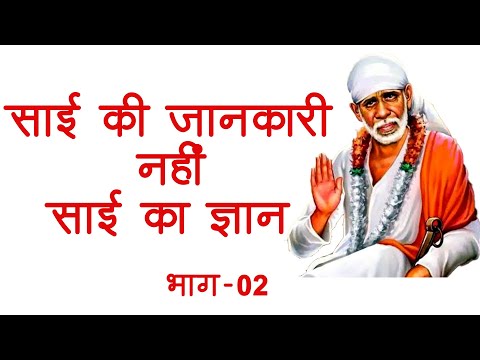
In the sacred annals of spiritual history, an avatar of Dattatreya, Sri Narasimha Saraswati, stood as a beacon of pure experience. He was not merely a man of words but a storehouse of realization. How...
Leela Narration
In the sacred annals of spiritual history, an avatar of Dattatreya, Sri Narasimha Saraswati, stood as a beacon of pure experience. He was not merely a man of words but a storehouse of realization. How...