
The Protocol of True Devotion: Reconciling Supremacy and Humility
The Leela
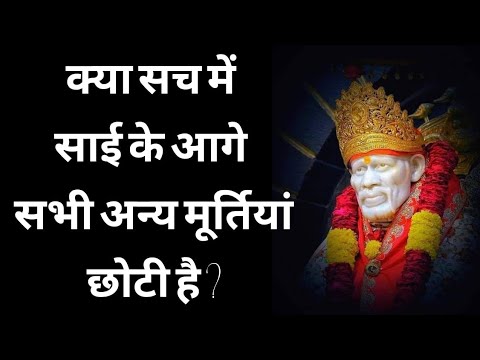
The visual hierarchy in a devotee's altar often sparks a profound contemplation. We often see large, majestic idols of Sai Baba, while at His feet, the forms of Lord Ganesha, Lord Hanuman, and Lord Rama appear smaller in comparison. To the logical mind, this raises a question of propriety: Are we diminishing the stature of these eternal Deities by elevating Sai Baba above them?
The answer lies not in disrespect, but in the specific nature of steadfast devotion (Nishtha). Just as the Devi Bhagavatam portrays the Trimurti taking refuge at the feet of Mother Shakti, and the Vishnu Purana depicts Lord Vishnu as supreme with other deities secondary, this narrative structure serves a specific spiritual function. It is not about objective superiority, but about strengthening the devotee's focus. For a devotee of Devi, She must be supreme; for a devotee of Rama, He must be everything. Similarly, the Sai Satcharitra is written for Sai devotees, depicting the 33 crore deities at Baba's feet to cement the devotee's faith in their chosen Master (Sadguru).
However, this supremacy is internal. The true test of this devotion arises when we step out into the world. If a devotee of Lord Rama stands before a Sai devotee, the true Sai devotee does not force Baba's name upon them. Instead, they speak the glories of Lord Rama, strengthening the other's faith in their own path. As the transcript reveals, "If we call ourselves true Sai devotees, not a single word should come out of our mouths that would shake his faith."
? The Conflict / Doubt
How can we justify placing the great Deities like Lord Rama, Krishna, and Hanuman at the feet of Sai Baba? Does this not contradict the principle of equality and show disrespect to these eternal Gods?
The Revelation
-
The Principle of Ishta Devata (Chosen Deity) Scriptures elevate a specific deity to the highest stature to consolidate the devotee's faith. This is a subjective truth essential for spiritual growth. For a Sai devotee, Baba is the universe; this focus prevents the mind from wandering.
-
The Etiquette of Interaction True devotion is not fanatical. When encountering a devotee of another path (be it Rama, Krishna, Christ, or Allah), one must "play their tune," not one's own.
"If he is a devotee of Lord Rama, then speak words about Lord Rama in such a way that his faith and devotion towards Lord Rama increase... Not a single word should come out of our mouths that would shake his faith."
-
Unity Through Understanding Fanaticism arises from a lack of understanding of one's own scriptures. A person who truly understands the Vedas, the Quran, or the Bible will naturally possess tolerance.
"When we do not understand our own Vedas properly... When we ourselves do not understand our own Bible... fanaticism arises."
-
Handling Criticism If one praises another's deity with genuine love and empathy, it disarms conflict. However, if the other person still offers criticism of Sai Baba despite this kindness, one should not engage.
"If there is genuine tolerance... and if he still speaks something wrong about your deity... one should leave from there with folded hands."
Scriptural References
📖 Devi Bhagavatam, Vishnu Purana, Shiva Purana, Bhagavad Gita, Sai Satcharitra
Watch the Discourse
The visual hierarchy in a devotee's altar often sparks a profound contemplation. We often see large, majestic idols of Sai Baba, while at His feet, the forms of Lord Ganesha, Lord Hanuman, and Lord Ra...
Leela Narration
The visual hierarchy in a devotee's altar often sparks a profound contemplation. We often see large, majestic idols of Sai Baba, while at His feet, the forms of Lord Ganesha, Lord Hanuman, and Lord Ra...