
The Lost Horse of the Mind: The Esoteric Meaning of Chand Patil and the Origin of 'Sai'
The Leela
The narrative takes us back to the dusty roads near Aurangabad, where a devout Muslim named Chand Patil was wandering in despair. For two months, he had been searching for his lost mare, a prized possession that had vanished without a trace. Disappointed and weary, dragging the heavy saddle on his back, he was about to return to his village, Dhoopkheda, empty-handed.
Suddenly, about 8 to 10 kilometers from Aurangabad, he saw a young Fakir sitting calmly under a mango tree. The Fakir called out to him—a call that felt less like a stranger’s greeting and more like a divine summons. Seeing the worry etched on Patil's face, the Fakir asked, 'Why are you so troubled? What carries this heavy saddle?'
With a heavy heart, Chand Patil confessed his failure: 'What can I say? My horse is lost. For two months I have searched everywhere, but I cannot find her.'
The Fakir smiled, pointing casually toward a nearby drain. 'What is the big deal? Your horse is right there, grazing by the drain. Go and look.'
To Patil's astonishment, the mare was exactly where the Fakir had pointed. It was a miracle; how could an ordinary ascetic know what had eluded him for months? But the wonders did not cease there. The Fakir prepared a Chillum (clay pipe) but had no fire or water. He struck the earth with his tongs (chimta), and sparks of fire emerged. He struck again, and water sprung forth to wet the cloth.
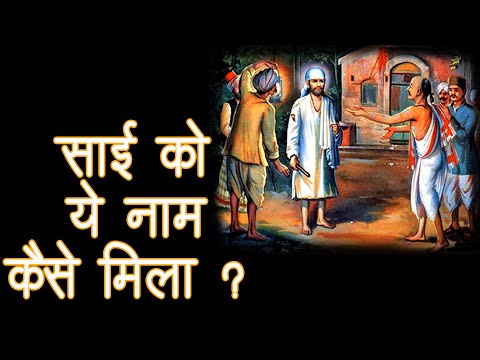
Captivated by this divinity, Chand Patil invited the Fakir to his nephew's wedding in Shirdi. When the wedding procession arrived at the Khandoba temple in Shirdi, the priest Mhalsapati saw the young Fakir disembark. Overcome by a sudden recognition of the Ancient Divinity standing before him, Mhalsapati spontaneously cried out, 'Aao, Sai!' (Come, Sai!). Thus, the anonymous Fakir received the name that would become a mantra for millions.
? The Conflict / Doubt
Is the story of Chand Patil merely a historical account of a lost animal found by a saint, or does it hold a deeper significance for our own lives? Furthermore, why did a divine being like Sai Baba engage in smoking a Chillum, an act often associated with intoxication?
The Revelation
This Leela is not just history; it is a profound allegory for the human condition.
-
The Lost Horse is the Mind: We are all Chand Patil. The lost horse represents our wandering Mind (Mana). Just as the horse wandered into a drain, our minds stray into the 'dirty drain' of worldly attachments—lust, greed, and ego. We lose our peace (the horse) over lifetimes, and the Sadguru's mission is to retrieve this lost mind and restore it to its source.
-
The Three Stages of Mind Control: The transcript clarifies that meditation is not the end goal.
- Manolai: Temporary calmness achieved through meditation techniques. The mind settles but returns to its old habits once the practice ends.
- Manonash: The destruction of the mind/ego, as seen in saints like Ramana Maharshi. Here, the mind is annihilated, and one merges with the Divine.
- Manojay: This is the state of Sai Baba. It is 'Victory over the Mind' (Victory over Maya). One who has achieved Manojay does not just destroy the mind but masters it. They can control their own mind and the minds of others to guide them.
-
The Philosophy of the Chillum: Baba's Chillum was not for intoxication; it was an instrument of Prestige and mastery. It symbolized His command over the Five Elements (Pancha Mahabhuta): Earth (clay pipe), Fire (ember), Water (wet cloth), Air (breath), and Space (smoke filling the sky). Only a Master with Manojay has the right to 'smoke the pipe' of the elements.
-
The Name 'Sai': The name was not given by parents but revealed through Mhalsapati. 'Sai' is a Sufi term for one who loves all equally, but esoterically, it refers to the Ancient, Indestructible Element (Avinash Puratan). It signifies the Supreme Brahman that existed before the universe.
-
God is Within: We search for God in Kashi, Kaaba, and temples, but as Kabir says, He is right beside us. The barrier is our ego. The transcript emphasizes that true spirituality is the 'sweetness of dissolution'—the willingness to let the false self die so the Real Self can emerge.
"I have come to stabilize your wandering mind again. I have come to retrieve the lost horse to you. This is the mission of my incarnation."
"Where do you search for me? I'm right beside you... Just understand my heart and act accordingly; you would find me one day within you."
Scriptural References
📖 Sai Satcharitra Chapter 5 (Origin of name Sai), Sai Satcharitra Chapter 39 (Ignorance of the mind), Tukaram Maharaj Abhang ("Tuj ahe tuj pasi..."), Kabir Dohe ("Moko kahan dhunde re bande", "Jin khoja tin paiya"), Bible (Jesus: "Whoever desires to live is killed...").
Watch the Discourse
The narrative takes us back to the dusty roads near Aurangabad, where a devout Muslim named Chand Patil was wandering in despair. For two months, he had been searching for his lost mare, a prized poss...
Leela Narration
The narrative takes us back to the dusty roads near Aurangabad, where a devout Muslim named Chand Patil was wandering in despair. For two months, he had been searching for his lost mare, a prized poss...