
The True Bath: Cleansing the Intellect on Makar Sankranti
The Leela
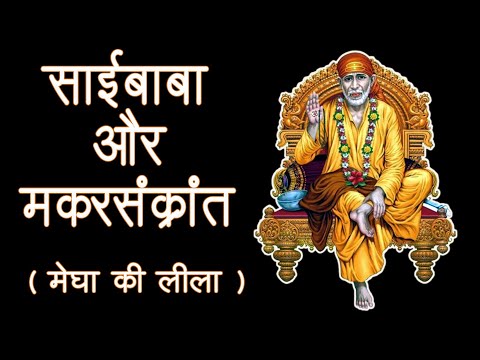
It was the auspicious day of Makar Sankranti, a time of transition from darkness into light. Megha, a devotee who revered Sai Baba as the visible manifestation of Lord Shiva, approached the dilapidated masjid of Dwarakamai with a fervent wish. Believing that Lord Shiva is pleased by the holy waters of the Ganges, Megha insisted on bathing Baba on this holy day.
Baba, the simple Fakir, protested, 'I sit in this dilapidated Masjid; what does a Fakir have to do with Gangajal? There is no need for this.' Yet, Megha’s persistence knew no bounds. He walked eight kos to the Godavari river to fetch a pot full of water and walked eight kos back in the scorching afternoon heat.
Seeing his devotee's stubborn love, Baba finally relented but with a specific instruction: 'Since you have brought water from so far, listen to me. The head is the chief part of the body. Just sprinkle some water on the head; it is as good as a full bath.'
Megha, overwhelmed by his zeal, could not stop at just a sprinkle. He emptied the entire pot over Baba. Yet, when the water settled, a miracle unfolded before their eyes—while Baba's head was wet, his entire body remained completely dry, as if not a drop had touched it. Baba had allowed the ritual, yet his will had prevailed.
? The Conflict / Doubt
Most readers stop at the miracle of the dry body, but the deeper question remains: Why did Baba insist that wetting the Head alone was sufficient for a bath?
Was this merely a display of supernatural power to prove that the Guru's will is supreme, or was Baba using the physical anatomy to teach a profound lesson about the Intellect (Buddhi) and spiritual cleansing?
The Revelation
Baba’s leela was not just about water; it was a metaphorical teaching on where the true cleansing must occur. The physical body is gross, but the Intellect is the master of the existence.
-
The Head as the Intellect: By stating the head is the chief part, Baba indicated that if the intellect is purified, the entire being is cleansed. A physical bath with soap scrubs the skin, but as Kabir says:
"Nahaey dhoye kya hua, jo man mael na jaye." (What is the point of scrubbing the body if the filth of the mind remains?)
-
Original Sankranti (San+Kranti): True Sankranti is not just the sun moving into Capricorn; it is a Positive Change (Kranti) within. It is the transition of the intellect from darkness (ignorance) to light (wisdom).
-
Gurmukhi vs. Manmukhi: A purified intellect is Gurmukhi—it operates by the will of the Guru and scripture. A corrupt intellect is Manmukhi—it operates by the whims of the ego.
- Shakuni & Duryodhana: Had intelligence, but it was cunning and lacked light. Their intellect led to destruction.
- Lord Rama: Had an enlightened intellect filled with righteousness (Dharma). Even when exiled, Rama saw it not as a conspiracy but as an opportunity to fulfill his duties to his father, mother, and brother Bharata.
-
The Ultimate Bath: To bathe the intellect means to immerse it in the light of Satsang (company of the wise), scriptures like the Sai Satcharitra, and the Guru's will. When the intellect is filled with light, it guides the senses correctly, and the soul moves from Tamas (darkness) to Jyoti (light).
Scriptural References
📖 Sai Satcharitra Chapter 28 (Megha's Bath); Sai Satcharitra Chapter 16 (Verses 95-96); Brihadaranyaka Upanishad (Asato Ma Sadgamaya); Ramayana; Mahabharata.
Watch the Discourse
It was the auspicious day of Makar Sankranti, a time of transition from darkness into light. Megha, a devotee who revered Sai Baba as the visible manifestation of Lord Shiva, approached the dilapidate...
Leela Narration
It was the auspicious day of Makar Sankranti, a time of transition from darkness into light. Megha, a devotee who revered Sai Baba as the visible manifestation of Lord Shiva, approached the dilapidate...