
Where Motivation Ends, Spirituality Begins: The Essence of Sai’s Nishkam Karma Yoga
The Leela
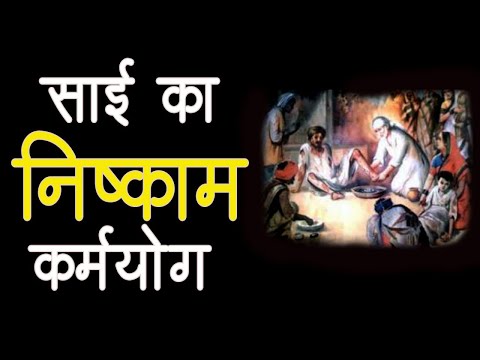
In the sacred thirty-second chapter of the Sai Satcharitra, Baba recounts a pivotal moment from His youth to illustrate the profound depth of selfless action.
At the threshold of adulthood, burdened with family responsibility, He set out in search of work. He arrived at the door of a wealthy merchant who engaged in Zari (embroidery) work. Four other workers were already employed there—skilled men who produced work worth ₹50, ₹100, and ₹150 respectively. But Baba, with His intense zeal and deft hands, produced work worth ₹300, double that of the most skilled among them.
The Master, observing this extraordinary dedication and skill, was pleased. Not only did he pay the ₹300, but he also honored Baba with a Zari turban and a shawl, welcoming Him warmly.
Here lies the twist of the Leela: Baba says, "I took the rewards as they were and kept them. I haven't even touched them."
He did not wear the turban to boost His ego or wrap the shawl for comfort. He earned the maximum through sheer competence but remained completely detached from the luxury it could buy. He demonstrated that one may possess the talent to earn millions—and indeed, one should earn if capable—but the lifestyle should remain that of a Fakir, using the wealth not for personal indulgence, but for the welfare of the world.
? The Conflict / Doubt
In an era dominated by motivational speakers who promise that "100% effort plus the right direction guarantees 100% results," how can a modern mind accept the spiritual dictum of Lord Krishna and Sai Baba?
The intellect argues: "If the fruit is not in my hands, and if God might give me a negative result despite my hard work, then why should I work hard at all? Is it practical for a householder to work without desire for the outcome?"
The Revelation
The Chief Editor clarifies that where worldly motivation ends, true spirituality begins. While motivational speakers sell the illusion of guaranteed control over results, Nishkam Karma Yoga teaches the reality of divine will.
- The Trap of Motivation: Motivational speakers rely on the promise of success to charge you up. But this energy is hollow because it collapses the moment failure strikes.
- The Spiritual Reality: Krishna and Sai Baba impose a harder condition: You must provide 100% effort, 100% focus, and 100% dedication, yet fully accept that the result is entirely His prerogative.
- The Three Possibilities: God may give you 1% fruit for 100% labor, 100% fruit for 50% labor, or He may give you an adverse result to test your faith. True Shraddha (Faith) is maintaining your loyalty to Him even when the result is the opposite of what you desired.
- The Practical Application: Baba’s teaching is not to stop earning. If you have the skill to earn crores, earn them! That is your talent. But live simply—perhaps on just ₹5000—and dedicate the rest to society.
- The Divine Promise: When you light up the world without selfishness, God lights up your inner self.
As the discourse reveals:
"Every 'Nishkam Karmayogi', remember, is an incarnation of Vishnu or Krishna. He is not an ordinary person... If you illuminate this world without any selfishness, then I make your inner self shine, I make you the leader of the universe (Bramhaandanayak)."
Scriptural References
📖 Bhagavad Gita (Karmanye Vadhikaraste Ma Phaleshu Kadachana); Sai Satcharitra Chapter 32.
Watch the Discourse
In the sacred thirty-second chapter of the *Sai Satcharitra*, Baba recounts a pivotal moment from His youth to illustrate the profound depth of selfless action. At the threshold of adulthood, burden...
Leela Narration
In the sacred thirty-second chapter of the *Sai Satcharitra*, Baba recounts a pivotal moment from His youth to illustrate the profound depth of selfless action. At the threshold of adulthood, burden...