
The Mystery of Obedience: Why the Guru's Command is Supreme
The Leela
In the sacred chronicles of Shirdi, specifically Chapter 22 of the Sai Satcharitra, we encounter the poignant tale of Amir Shakkar. A native of Korade residing in Bandra, Amir suffered terribly from rheumatic fever. His body was stiff, swollen, and in agony, leading him to seek refuge at Sai Baba’s feet. He came hoping for a cure, but the "medicine" Baba prescribed seemed completely contradictory. Baba ordered him to stay in the Chavadi for nine months.
This was before 1910, a time when the Chavadi was in a dilapidated state—wet walls, roofless sections, knee-deep potholes, and infested with snakes and scorpions. For an arthritis patient, living in such a damp, cold environment was medically disastrous. Yet, the spiritual prescription was clear: Endure and Obey.
Amir struggled. Faith sustained him for a few months, but as the pain increased and the rains made the Chavadi uninhabitable, his patience collapsed. Thinking he could not explain his departure to Baba, he decided to flee secretly before dawn, hoping to escape unnoticed.
He reached a dharamshala in Kopargaon, where he encountered an old, abandoned man on the verge of death, crying out for water. Moved by compassion, Amir gave him a drink. The moment the water touched the old man's lips, he passed away. Amir was suddenly gripped by fear—fear of police implication and being trapped in a legal crisis. In that moment of panic, realization dawned: "I tried to do good, but it turned bad. This is the result of disobeying Baba's command."
He returned to Shirdi as quietly as he had left, accepting the Chavadi as his sanctuary once more, understanding that the Guru’s protection lies solely within the circle of His command.
? The Conflict / Doubt
Why does the Guru give commands that defy logic or seem to cause physical hardship?
Stories abound of devotees suffering misfortunes—missed trains, overturned carriages, or hunger—simply for leaving Shirdi without permission. Is this merely a display of Dominance or authority? Why must the Guru's word be followed so rigidly, even when it seems irrational to the intellect?
The Revelation
The strictness of the Guru is not born of ego, but of deep, far-sighted compassion. The story of Amir Shakkar serves as a stark contrast to that of Kaka Saheb Dixit (who was ready to slaughter a goat purely on Baba's order), highlighting the spiritual necessity of surrendering the intellect.
-
The Consequence of Disobedience: As the poet Kabir warns, wherever a disciple goes by violating the Guru's command, "death looms over him." No matter how virtuous the act performed independently (like giving water to the dying), without the Guru's alignment, the outcome can turn dreadful.
-
The Seed of Obedience: Baba's small commands—"Stay for 4 days," "Wait a little longer"—are not about control. They are training grounds. He is cultivating the habit of obedience in the devotee.
-
Preparation for the Mahavakya: The ultimate goal of the Guru is to bestow the highest realization: "Tat Tvam Asi" (Thou Art That). Baba wants to realize the non-difference between the soul and God within the devotee.
-
Crushing the Ego: If a devotee cannot surrender their ego to a small command like "stay in Shirdi," they will never be able to accept the colossal truth that they are one with the Divine. The ego must be thinned through obedience so that the final truth can be received without resistance.
"My aim is to take you to that command... that I am You and You are Me. The day I give this command to you, without any doubt, without any suspicion, that should enter within you."
Scriptural References
📖 Sai Satcharitra Chapter 22 (Story of Amir Shakkar), Chapter 23 (Kaka Saheb Dixit), Chapter 9 (Rules of leaving Shirdi)
Watch the Discourse
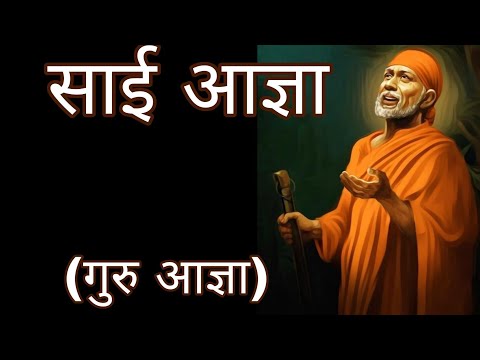
In the sacred chronicles of Shirdi, specifically Chapter 22 of the *Sai Satcharitra*, we encounter the poignant tale of Amir Shakkar. A native of Korade residing in Bandra, Amir suffered terribly from...
Leela Narration
In the sacred chronicles of Shirdi, specifically Chapter 22 of the *Sai Satcharitra*, we encounter the poignant tale of Amir Shakkar. A native of Korade residing in Bandra, Amir suffered terribly from...