
Decoding the Cosmic Lamp: The Esoteric Wisdom of Shej Aarti
The Leela
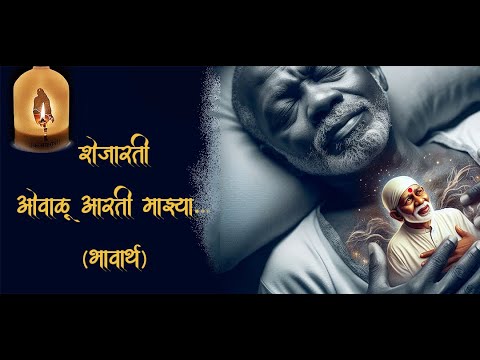
In the sacred stillness of Shirdi, as the clock strikes 10:00 PM, the frenetic energy of the world fades, and the devotee enters the realm of the Shej Aarti. For over five centuries, the verses of Saint Tukaram Maharaj—Ovalu arati mazya Sadgurunatha—have echoed through the holy lands of Maharashtra. Yet, often these words are sung merely as a ritual, their profound weight unnoticed.
The speaker invites us to look beyond the melody and into the mind of Tukaram. This is not just a song; it is a description of the highest state of Tattvagyan (Elemental Knowledge). The devotee is asked to visualize themselves not just holding a brass lamp, but transforming their very existence into a lamp of the five elements. It is a moment where the night does not signify sleep, but a spiritual awakening where the world disappears, attachment is cut, and the soul waits in tears and remembrance for the Beloved. The narrative transports us from the physical act of waving a lamp to the internal alchemy of merging earth into water, water into fire, fire into air, and air into space, offering the totality of one's being to the Sadguru.
? The Conflict / Doubt
Most seekers confuse Aatmagyan (Self-Knowledge) with Tattvagyan (Elemental/Universal Knowledge), assuming they are the same; furthermore, when we sing of the "Seven Seas" (Saptasagari) in the Aarti, do we merely mean physical oceans, or does this refer to a hidden cosmic architecture?
The Revelation
The transcript reveals that Shej Aarti is a masterclass in cosmology and devotion, distinguishing between the realization of the Self and the mastery over the Elements.
- The Distinction of Knowledge: Aatmagyan is self-realization, but Tattvagyan is the structural understanding of the Universe. Sai Baba is described as the incarnation of Tattvagyan, which is why He held command over the elements (fire, rain) as seen in Chapter 11 of the Sai Satcharitra.
- The Lamp of Five Elements: The line 'Panchahi tatvanca dipa lavila ata' signifies the yogic process of involution—merging the grosser elements back into the subtler ones until only the 'sky' (Akasha) remains, which is then lit as a lamp of pure consciousness for the Guru.
- Nirguna to Saguna: The Formless (Nirguna) is too vast for the human mind to grasp. Out of compassion, the Infinite squeezed itself into a finite form (Saguna)—wearing a kafni and sitting by the Dhuni—so the devotee could comprehend and love Him.
- The Seven Oceans (Saptasagari): This does not refer to earthly waters, but the seven stages of cosmic descent:
- Parabrahma: The Absolute.
- Avyakt: The Unmanifest.
- Mahatattva: The Cosmic Womb (Hiranyagarbha).
- Ahamkar: The Ego/Individualization.
- Panchatanmatra: The five subtle essences.
- Mind/Intellect: The cognitive instruments.
- Panchamahabhuta: The five gross elements.
"Ovalu arati mazya Sadgurunatha... Brahmandici racana keisi dakhavili dola." — I perform this Aarti, O Sadguru, for You have granted me the divine vision to see the structure of the entire Universe within You.
Scriptural References
📖 Sai Satcharitra Ch 11, Ch 36, Ch 50; Bhagavad Gita Ch 13 Verse 12; Sant Kabir Dohe
Watch the Discourse
In the sacred stillness of Shirdi, as the clock strikes 10:00 PM, the frenetic energy of the world fades, and the devotee enters the realm of the *Shej Aarti*. For over five centuries, the verses of S...
Leela Narration
In the sacred stillness of Shirdi, as the clock strikes 10:00 PM, the frenetic energy of the world fades, and the devotee enters the realm of the *Shej Aarti*. For over five centuries, the verses of S...