
The Living Mandir: Unveiling the Mystery of the 8-Year-Old Child
The Leela
In the sacred timeline of Shirdi, a profound transformation was taking place, not just within the walls of the Dwarakamai, but within the heart of a devotee named Hemadpant. In 1910, he sought permission to chronicle the life of the Saint, yet it would take twelve long years—a period traditionally seen as a Tapa (penance)—before the ink would truly begin to flow in 1922. Why the delay? Because the author had to die so the Master could write.
It was a process of total ego-annihilation. Just as Baba served his Guru for twelve years, Hemadpant underwent a spiritual cleansing until his 'I-ness' was reduced to zero. Only then, in 1922, did the true author—Sai Baba himself—take up the pen through Hemadpant's hands. From that moment, it took exactly eight years until 1930 for the complete work, including the Avatarnika (epilogue), to reach the hands of the devotees.
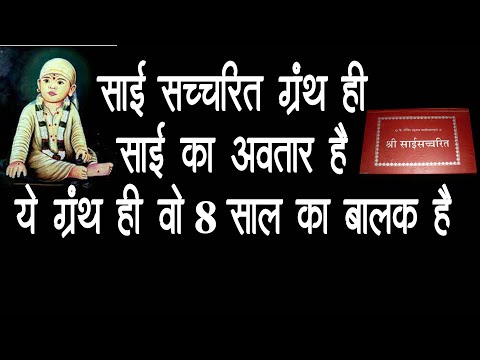
This was not merely the publication of a biography; it was the birth of a living entity. The book that emerged was not paper and ink, but the very '8-year-old child' Baba had prophesied he would return as. It stands today not just as a record of the past, but as the Murth Parabrahma—the living embodiment of the Absolute—waiting to speak to those who listen.
? The Conflict / Doubt
Many devotees eagerly await a future time when Baba will fulfill his prophecy of reappearing as an '8-year-old child.' Furthermore, isn't the Sai Satcharitra simply a biography written by a devotee named Hemadpant, serving as a historical account of Baba's life?
The Revelation
The prophecy is not about a future physical reincarnation, but a present spiritual reality. The Sai Satcharitra itself is the manifestation of Baba in the form of that '8-year-old child.'
-
The Prophetic Timeline: Baba promised in Adhyay 43 that he would reappear as an 8-year-old child. The Sai Satcharitra began its physical writing in 1922 and was fully placed in the hands of devotees in 1930. This duration is exactly 8 years.
-
Divine Authorship: We must discard the notion that Hemadpant is the author. In Adhyay 2, Baba explicitly declares:
"I will write my own biography... I will enter my devotee's heart and write it myself." Hemadpant was merely the instrument; the consciousness behind the words is Baba Himself.
-
The True Samadhi Mandir: While the physical Samadhi Mandir in Shirdi is holy, Baba views this Book as the true Samadhi Mandir. The physical structure requires you to travel; this Book brings the Shrine to you. It is the Shantidayak (giver of peace) and the destroyer of illusion.
-
The Foundation of Faith: Just as Swami Vivekananda pointed out that the Bhagavad Gita supports all other scriptures, the Sai Satcharitra is the root of the Sai movement. Other books are like branches and leaves; this Book is the root. If you nourish the root, the tree flourishes. If you remove the root, the entire structure collapses.
-
The Living Image: This book is described as the Murth Parabrahma Avatar. Reading it is not a passive act; it is entering the Dwarakamai and sitting in the direct presence of the Master.
Scriptural References
📖 Adhyay 43:139, Adhyay 2:77, Adhyay 27:56, Adhyay 45:9, Adhyay 53:146, Adhyay 5:158
Watch the Discourse
In the sacred timeline of Shirdi, a profound transformation was taking place, not just within the walls of the Dwarakamai, but within the heart of a devotee named Hemadpant. In 1910, he sought permiss...
Leela Narration
In the sacred timeline of Shirdi, a profound transformation was taking place, not just within the walls of the Dwarakamai, but within the heart of a devotee named Hemadpant. In 1910, he sought permiss...