
The Divine Verdict: When to Cast Chits for Decision Making?
The Leela
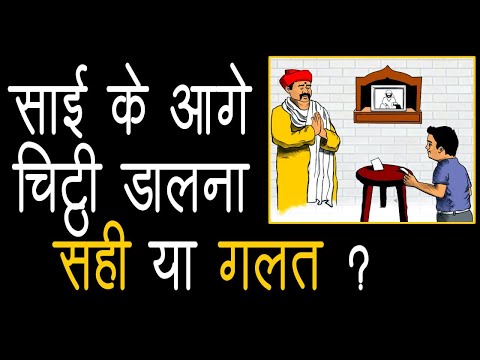
In the labyrinth of life's decisions, a devotee often stands at a crossroads, clutching a piece of paper—a chit—hoping for a divine command. Imagine a man facing a severe financial recession; his home lacks food, and despair looms large. Suddenly, as he walks down the street, a neighbor unknowingly drops a thick bundle of currency notes.
The mind, ever the trickster, whispers, 'Look! Baba is kind. He saw your struggle and forced this bundle to fall right before your eyes.'
Here lies the test. The conditioned mind urges, 'Let us cast a chit. Let us ask Baba if we should take this money.' But deep within, the voice of Vivek (conscience) speaks the unspoken truth: the money belongs to another. To cast a chit here is not devotion; it is a manipulation of the divine to validate greed. The true path is clear without lots—return the money. Yet, there are moments where two paths lie ahead, both righteous, both leading to Shreyas (spiritual good), and the intellect is paralyzed. It is here that the surrender of the chit finds its true meaning.
? The Conflict / Doubt
Can a devotee rely on casting chits (drawing lots) for every small and big issue in life to ascertain Baba's will, or does this practice have specific spiritual limitations?
The conflict arises when devotees attempt to bypass their own God-given conscience (Vivek) by demanding divine intervention for clear-cut moral decisions, or when they use the practice to validate their own hidden desires.
The Revelation
The Master clarifies that the casting of chits is a tool for the confused, not a crutch for the morally blind. The guidance is structured through levels of spiritual maturity:
-
The Realm of Conscience (Right vs. Wrong): God has endowed human beings with intellect and wisdom. When the choice is between a right action and a wrong action (e.g., keeping found money vs. returning it), one must not cast chits.
"If it will give some wrong result, then the blame game will be on Baba... there will be no greater foolishness than this."
-
The Realm of Confusion (Right vs. Right): When two options are available, and both lead to Shreyas Marg (the path of the good), yet the mind cannot decide, one may surrender to Baba through chits. This is valid because there is no involvement of Preya (pleasant but harmful desires).
-
The Trap of the Ego: One must not use chits to impose their will on Baba, playing "best of three" or "best of five" until the desired answer appears. As referenced regarding Chapter 25:
"You cannot deceive me... As long as your ego stands against me."
-
The Ultimate Goal: Casting chits is acceptable in the initial stages of Sadhana. However, the higher goal is to increase the intensity of devotion, erasing the sense of doership and duality. When the devotee merges with the Divine will, the inner consciousness provides the answer naturally, turning the chits into dust.
Scriptural References
📖 Sai Satcharitra Chapter 25
Watch the Discourse
In the labyrinth of life's decisions, a devotee often stands at a crossroads, clutching a piece of paper—a chit—hoping for a divine command. Imagine a man facing a severe financial recession; his home...
Leela Narration
In the labyrinth of life's decisions, a devotee often stands at a crossroads, clutching a piece of paper—a chit—hoping for a divine command. Imagine a man facing a severe financial recession; his home...