
Beyond Good and Bad Time: The True Essence of Adhik Mas
The Leela
In the vast flow of existence, humanity has always sought to measure the immeasurable—Time. We mark our calendars, seeking the Shubh (auspicious) and fearing the Ashubh (inauspicious). The discourse takes us to the arrival of the Adhik Mas (Intercalary Month), a phenomenon born from the dance between the Sun and the Moon.
While the Solar year marches on 365 days, the Lunar year trails at 354. To bridge this 11-day gap, nature gifts us an extra month every three years. Yet, because the Sun does not transit into a new Zodiac sign during this period, tradition labeled it Mal Mas—the month of dirt. Without the Sun's touch, it was deemed impure.
However, the ancient Rishis, in their boundless compassion, saw an opportunity in this 'rejected' time. Knowing the human tendency for transaction, they declared: "In this dirty month, if you perform spiritual practices, the fruits will be infinite." Like a bribe offered to a child, this promise was made to push humanity from the mortal to the immortal.
But the true Leela lies not in the calendar, but in the understanding that the Sun—representing the Intellect—must constantly illuminate the inner world. Just as the earth falls into night only when it turns away from the Sun, our lives fall into darkness only when we turn our backs on God.
? The Conflict / Doubt
Why do we label time as 'good' or 'bad' based on external events or astrological charts? If Adhik Mas is considered 'Mal' (dirty) or inauspicious because the Sun does not enter a Zodiac sign, why do we suddenly consider it holy enough for enhanced spiritual rewards? Is our devotion merely Sakam (selfish/transactional), performed only when promised a greater return?
The Revelation
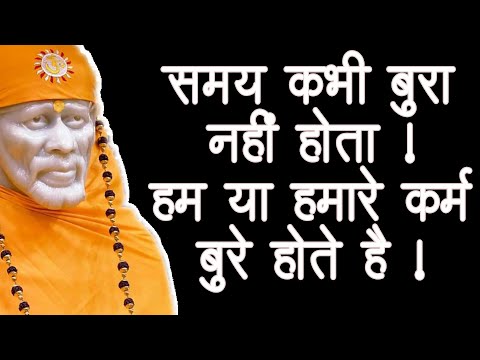
The Master reveals that Time flows like a river; it has no inherent quality of good or bad. It is the event—and our reaction to it—that colors a moment.
-
The Metaphor of the Sun: Just as the physical world needs the Sun to avoid disease and darkness, our inner world (the Brahmand of the body) needs the 'Sun' of Intellect filled with discretion and ethics. When we lack this inner light, every month becomes a Mal Mas (month of dirt).
-
The Trap of Transaction: We are stuck in Sakam Bhakti. We wait for Ekadashi, Thursday, or Adhik Mas to pray, thinking the 'time' will amplify our results. We treat God like a business deal.
-
The Definition of Darkness: The Sun never sets; the Earth turns away. Similarly, God's grace never ceases; we turn away. As stated in the Sai Satcharitra:
"Laksya lavi jo mazkade. Nahi tayasi kaichehisankade." (He who looks at Me, no difficulty can touch him. But the moment he forgets Me, Maya surrounds him.)
- The Ultimate Truth of Auspiciousness: We must graduate from needing 'special days' to making every moment holy. As Kabir taught, rules and astrologies are for beginners. For the lover of God, the only auspicious time is now.
"Kabira wahi shubh din shubh ghadi, yaad ave jab naam." (O Kabir, that day and that moment alone are auspicious when the Name of the Lord is remembered.)
Scriptural References
📖 Sai Satcharitra (Verse on 'Looking at Baba'), Kabir Dohe ('Kabira wahi shubh din...'), Traditional Hindu Calendar (Adhik Mas/Purushottam Mas)
Watch the Discourse
In the vast flow of existence, humanity has always sought to measure the immeasurable—Time. We mark our calendars, seeking the *Shubh* (auspicious) and fearing the *Ashubh* (inauspicious). The discour...
Leela Narration
In the vast flow of existence, humanity has always sought to measure the immeasurable—Time. We mark our calendars, seeking the *Shubh* (auspicious) and fearing the *Ashubh* (inauspicious). The discour...