
The Illusion of Doership: Who Truly Performs the Good Deed?
The Leela
Imagine a scenario on a busy road. A traveler witnesses a terrible accident. Seeing the victim bleeding and in pain, a wave of compassion surges through the traveler's heart. Without hesitation, he rushes to the scene, lifts the injured man into his vehicle, and speeds to the hospital. He admits the victim, pays the substantial medical bills from his own bank account, and ensures the man receives treatment. Within three days, the victim is cured.
Naturally, the traveler feels a sense of satisfaction. He thinks, "I saved a life today. I paid the money. I did a noble deed."
However, this sense of "I" is the subtle trap of Maya. Whether it is a grand philanthropist like Ratan Tata donating millions or a common man saving an accident victim, the moment the thought arises—"I have done this because of my righteousness"—the spiritual merit is tainted by pride. The true Leela is not the act of saving the life, but the invisible orchestration of Grace that allowed the act to happen in the first place.
? The Conflict / Doubt
If a person physically exerts effort, feels the emotion of pity, and spends their own hard-earned money to help another, why is it considered ignorance to claim credit for the deed? Is it not the individual's free will and resources that executed the noble task?
The Revelation
The Master reveals that claiming credit for a good deed is the result of being blinded by Maya. If we dissect the anatomy of the "noble deed," we realize that the individual was merely an instrument supported by four invisible pillars of Grace:
- The First Blessing (Environment): The Master explains that if you had fought with your wife or family before leaving home, your mind would have been agitated. You would have been indifferent to the world, perhaps ignoring the accident entirely. That your home environment was peaceful was His doing.
- The Second Blessing (Compassion): Many see accidents and walk away. That your heart was suddenly filled with mercy is not your doing; it is the Lord filling you with necessary emotion.
- The Third Blessing (Vitality): You possessed the physical strength to lift the injured body. Had you been frail or ill, the intention would have remained unfulfilled.
- The Fourth Blessing (Resources): You had the bank balance to pay the bill. Without this provision provided by the Divine, your compassion would have been helpless.
Therefore, the Master admonishes:
"Because of so many pillars, one apex of goodness stands tall. Then to say that 'I have done the noble task'—what can be more ignorant than this?"
Even when acting out of Sattva Gun (purity/goodness), one must offer the credit to Baba to avoid the pride of righteousness. One must say with tears in their eyes:
"Master, it is Your compassion that You have given me such thinking that I could help people."
Watch the Discourse
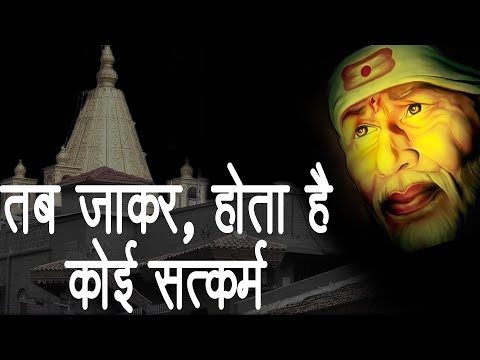
Imagine a scenario on a busy road. A traveler witnesses a terrible accident. Seeing the victim bleeding and in pain, a wave of *compassion* surges through the traveler's heart. Without hesitation, he ...
Leela Narration
Imagine a scenario on a busy road. A traveler witnesses a terrible accident. Seeing the victim bleeding and in pain, a wave of *compassion* surges through the traveler's heart. Without hesitation, he ...