
The Mystery of the Burnt Matchsticks: A Symbol of Ego Annihilation
The Leela
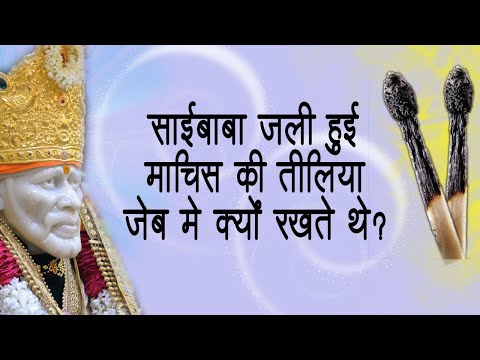
In the early days of Shirdi, when Sai Baba first appeared as a young radiance of sixteen, his demeanor was shrouded in enigma. For many years, he accepted nothing from anyone. Instead, observers witnessed a peculiar habit: Baba would wander about, collecting burnt matchsticks from the ground, filling his pockets with these charred remnants. To the unseeing eye, this appeared to be the behavior of a madman—for who but a maniac collects useless ash?
During this period, Baba surrounded himself only with the spiritually elevated—souls like Devidas, Jankidas, and Gangagir. He spent his time in the company of these Yogis, seemingly aloof from the worldly masses. However, as time flowed like the river Godavari, a shift occurred. The same Baba who once hoarded burnt wood began asking for Dakshina from ordinary visitors. He moved from the company of ascetics to the chaotic crowds of common householders, demanding rupees and coins. What prompted this transformation? What was the secret weight of those burnt matchsticks in his pocket?
? The Conflict / Doubt
If an ordinary person wanders the market collecting burnt refuse, society labels them insane or demented. How can a Sadguru, who is omnipotent and a complete persona, engage in such seemingly manic behavior? Furthermore, how do we reconcile the contradiction between his initial refusal of all gifts and his later insistence on asking for Dakshina (money)?
The Revelation
The act of collecting matchsticks was never madness; it was a profound metaphor for the state of spiritual perfection.
-
The Anatomy of the Matchstick: If we observe a matchstick, the coated head represents the human Ego (conceit), and the stick represents the body. A burnt matchstick is one whose head—the source of ignition and potential danger—has been completely incinerated.
-
The Symbolism: Baba collected these sticks to symbolize those rare souls whose Ego had been utterly annihilated. These "burnt heads" were the Saints and Yogis (like Devidas and Gangagir). Baba kept them in his pocket, meaning he kept such egoless beings close to his heart.
-
The Shift to Compassion: Initially, Baba remained in the bliss of saintly company. However, a realization dawned upon the Sadguru:
"Futile is when I light the already lighten place... If I can make an ordinary man a Saint, then nobility is in it."
- The Purpose of Dakshina: To transform an ordinary man into a "burnt matchstick" (a Saint), the fuel of the ego must be removed. This fuel is Attachment, which is deeply rooted in money. By asking for Dakshina, Baba was not seeking wealth; he was performing surgery—sweeping out the attachments and hopes that bind a human to the material world. By taking their money, he took away their reliance on the material, pushing them toward the void where sainthood begins.
Scriptural References
📖 Sai Satcharitra Chapter 5 (Reference to saints Devidas, Jankidas, Gangagir); Sai Satcharitra Chapter 14 (Contradiction of collecting sticks vs. asking for Dakshina).
Watch the Discourse
In the early days of Shirdi, when Sai Baba first appeared as a young radiance of sixteen, his demeanor was shrouded in enigma. For many years, he accepted nothing from anyone. Instead, observers witne...
Leela Narration
In the early days of Shirdi, when Sai Baba first appeared as a young radiance of sixteen, his demeanor was shrouded in enigma. For many years, he accepted nothing from anyone. Instead, observers witne...