
Hari Kanhoba's Test: Leaving Comfort and Pride at Baba's Feet
The Leela
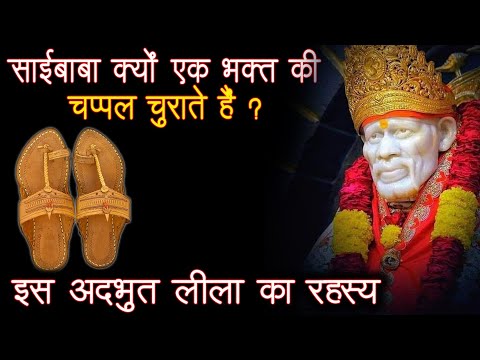
In the bustling city of Mumbai lived Hari Kanhoba, a wealthy man known not for his devotion, but for his skepticism. He possessed a fondness for miracles rather than faith in saints. Driven by an urge to test the authenticity of the tales surrounding Shirdi, he set out on a journey, adorned in a brand new pair of expensive footwear and a majestic jari-embroidered turban.
Upon arriving at the Dwarkamai, Hari Kanhoba bowed at Baba’s feet, yet his mind was not on the Saint, but on his precious new shoes. Finding no safe spot, he shoved them into a corner, hoping they would remain unnoticed. He took Baba’s darshan and received the Udi prasad, but when he returned to the corner, his heart sank—the shoes were gone.
Restless and agitated, he retreated to Sathe Wada. Though he bathed, performed pooja, and sat for a meal, his mind was utterly plagued by the loss of his footwear. As he finished his meal and stepped out to wash his hands, a strange sight greeted him: a young boy appeared, holding a stick with the missing sandals dangling from the end. The boy cried aloud, "Hari ka beta jari ka Pheta" (Son of Hari, wearing a Jari turban).
Hari Kanhoba rushed forward, claiming the shoes. The boy replied sternly, "He who is the son of Hari and shows me his Jari turban, only to him will I give these sandals." Amazed, Hari Kanhoba revealed his identity as the son of Hari Krishnaji and pointed to his turban. As he reclaimed his shoes, a profound realization struck him—how did Baba know his father's name and his intentions? The test he meant for the Saint had turned into a lesson for himself.
? The Conflict / Doubt
Can a skeptic who only seeks miracles truly understand the divinity of a Saint, or is their judgment clouded by their own comfort?
Hari Kanhoba arrived in Shirdi with a skeptical intellect, driven by the desire to verify if miracles actually happen. He did not come with faith, but with a challenge in his heart to test Sai Baba. When his shoes disappeared, his skepticism turned into agitation, raising the internal conflict: Why would a Saint allow such a nuisance?
The Revelation
Baba used the simple incident of lost shoes to deliver a profound spiritual surgery on Hari Kanhoba’s ego and attachment. The teaching unfolds in several layers:
-
The Cure for Judgment: When life is too comfortable, the mind often turns to mischief, judging saints and peers. Baba created a disturbance—the loss of shoes—to shift Hari's focus. Although agitated, his mind was saved from the wickedness of judgment. As the transcript notes:
"If we have become more 'tamo guni' (ignorant/lazy) than our limits, He will create problems in our life to deprive us from that tamo gunn."
-
Symbolism of Shoes (Comfort): Shoes represent physical comfort and body consciousness. We wear them to protect feet from thorns, but to enter the Divine Court (Darbar), one must leave them behind.
"Unless you are unable to leave your comforts, you will never have darshan of My real eternal form."
-
Symbolism of Turban (Pride): The transcript links the turban to pride, honor, and fame. Baba distinguishes between types of devotees:
- Arta: Worries about 'shoes' (daily needs, relief from trouble).
- Artharthi: Worries about the 'turban' (social status, pride, name).
- Jigyasu & Mumukshu: The true seekers who rise above both comfort and pride.
-
The True Devotee: Baba’s sight rests not on those who selfishly guard their status or comfort, but on the selfless.
"The one who shuns own's wish and wears the diadem of My wish, is My true jigyasu and is My true mumukshu."
Scriptural References
📖 Sai Satcharitra Chapter 49
Watch the Discourse
In the bustling city of Mumbai lived Hari Kanhoba, a wealthy man known not for his devotion, but for his skepticism. He possessed a *fondness for miracles* rather than faith in saints. Driven by an ur...
Leela Narration
In the bustling city of Mumbai lived Hari Kanhoba, a wealthy man known not for his devotion, but for his skepticism. He possessed a *fondness for miracles* rather than faith in saints. Driven by an ur...