
The Naked Truth: Beyond Hindu and Muslim
The Leela
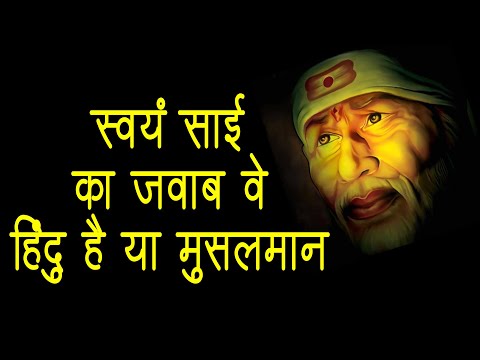
It was Vijayadashami in 1916, exactly two years prior to Saibaba's Mahasamadhi. During the ritual of Seemollanghan, a storm brewed not just in the skies, but within the Dwarkamai. Clouds thundered and lightning struck, mirroring the sudden, fierce transformation in Baba. He appeared as Jamadagni—anger incarnate.
In a moment of profound and shocking intensity, Baba stripped off his langot (loincloth) and kafni (robe) and cast them into the roaring fire of the Dhuni. Standing stark naked before the flames, the Saint roared at his devotees:
"Look! Look and tell me whether I am a Hindu or a Muslim! You have troubled me your whole life with this question. Now look and decide!"
The devotees stood frozen, witnessing a Leela that seemed to defy social norms, searching for the meaning behind the rage.
? The Conflict / Doubt
How can the Saint who preached Sabka Malik Ek (The Master is One) suddenly demand a physical inspection of his religion? By asking devotees to check for circumcision, Baba seems to be reducing his identity to the physical body. If circumcised, he is labeled Muslim; if not, Hindu. In either case, it appears contradictory to his lifelong teaching of transcending religious divides.
The Revelation
This act was not a display of anger, but a profound demonstration of Advaita (Non-duality), explained through the lens of the Bhagavad Gita.
- Casting off the 'Clothes': Just as the Gita states that the soul casts off worn-out bodies like old clothes, Baba symbolically incinerated his 'outer coverings'—name, form, and caste—in the fire. He was revealing that he is not the body.
- The Nature of Ignorance: The langot represented Vyasthigat Agyan (individual ignorance guarding the lower self), and the kafni represented Samashtigat Agyan (collective ignorance guarding the head/intellect). By burning them, Baba showed that one must incinerate these layers of ignorance to reach the state of Purnabrahma.
- Pure Light: The naked form standing before the Dhuni was not a human body to be judged by religion, but Jyoti Swaroop Parabrahma—Eternal Light. Light has no religion, no caste, and no creed.
"My name, my form, my modalities, and my religion are mere masks... in reality, I am that illuminance on whose strength this creation operates. Undoubtedly, I am attire-less."
Scriptural References
📖 Shri Sai Satcharitra Chapter 42; Bhagavad Gita
Watch the Discourse
It was Vijayadashami in 1916, exactly two years prior to Saibaba's Mahasamadhi. During the ritual of *Seemollanghan*, a storm brewed not just in the skies, but within the Dwarkamai. Clouds thundered a...
Leela Narration
It was Vijayadashami in 1916, exactly two years prior to Saibaba's Mahasamadhi. During the ritual of *Seemollanghan*, a storm brewed not just in the skies, but within the Dwarkamai. Clouds thundered a...